
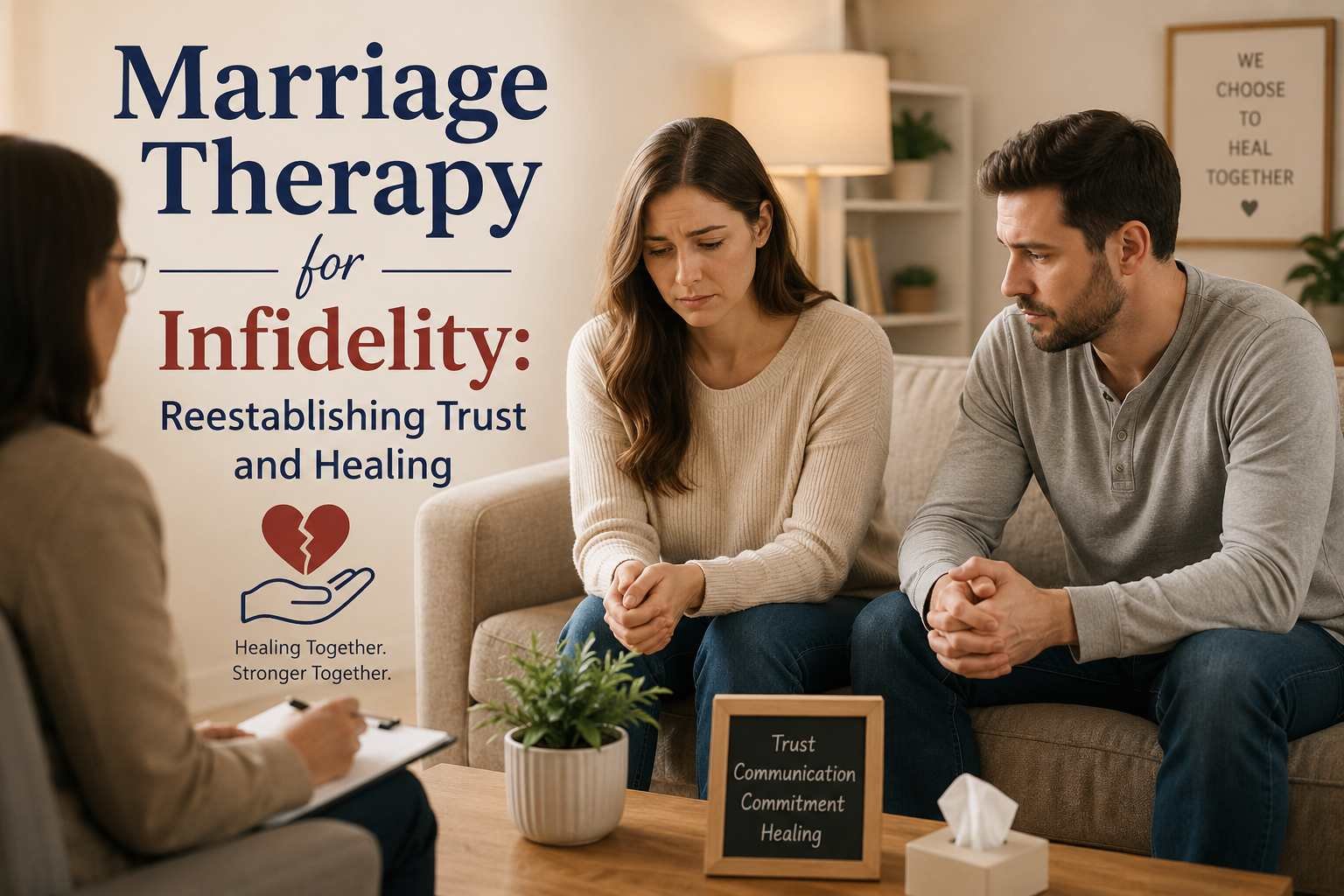
Marriage therapy for infidelity provides a secure and safe place for couples to work through betrayal during a difficult time. Also, marriage therapy can become an essential element for healing the relationship, renewing trust, and dealing with the emotional trauma that comes from betrayal.
Moreover, cheating is one of the most challenging crises in a relationship that a couple can face, and it touches millions of couples throughout various backgrounds and cultures.
Some therapists have generated a large and varied body of advice to understand better the definitions of cheating. They can also predict infidelity and the results of cheating for couples and partnerships.
In this guide, you can explore the multifarious nature of infidelity, its emotional effects, and evidence-based approaches to repairing trust after betrayal or cheating.
What Is Infidelity?
Infidelity appears when one partner in a marriage or a committed relationship violates the boundaries or experiences emotional, sexual, or both betrayal. Also, it is generally defined as a type of emotional involvement or physical interaction with another person. Moreover, cheating is injurious to a relationship, and it violates the exclusivity expectations of the relationship.
But we cannot give the exact definition or meaning of infidelity and cheating because it has become more complex, as betrayal research shows that perceptions vary between partners and couples.
Different types of Infidelity in a relationship:

Modern Therapists have recognised distinct forms of betrayal with particular characteristics and impacts on a loyal relationship:
1: Sexual:
Sexual cheating is also very important because it involves engaging in intimate activities with outside partners in a relationship. Also, this type of betrayal receives the most hate and criticism worldwide. Despite all facts, people cheat on their loyal partners and can hurt a couple’s private life.
2: By emotional:
Emotional cheating may involve forming an intense emotional bond with a person outside the main relationship. Also, this type of cheating may involve a physical relationship with another person, and it can be a disappointment for the couple who lives in a committed relationship.
3: Digital or Online:
Digital or online cheating causes various kinds of betrayal or infidelity. Moreover, many partners and couples can engage in different types of cheating that a person cannot easily identify. Many adults have engaged in online cheating in many ways, such as using digital and social media platforms.
Also, this includes:
1: People are doing Sexting or intimate messaging using chat apps.
2: Cheaters are always cheaters because they can find various ways to have virtual relationships on internet platforms.
3: A partner can find some dating apps while in a relationship
4: They have secretive social media interactions or give financial Infidelity.
Marriage Therapy for infidelity is a good choice for couples:
A couple immediately contacts a therapist when they face various problems in their relationship. But sometimes we don’t know how to identify the cause of a broken marriage or relationship, or how to address it. Moreover, cheating becomes one of the hardest problems in someone’s life to swallow, and they can’t find enough ways to overcome it. Sometimes a partner doesn’t know the causes and solutions.
Furthermore, when a partner finds or faces infidelity, they should consult a marriage therapist to solve the problems. Also, they can identify some reasonable causes and propose solutions to rebuild trust in a relationship.
At the beginning, the couple may not be able to enter into therapy after a major cheating incident or affair. So, many relationship experts in the market easily recognize that the first 72 hours after learning about infidelity and they have considered it a crisis phase.
However, cheating is tragic for a loyal partner when the other partner is deceiving him. So, in this phase, the couple should quickly contact an infidelity expert. Thus, the experts can support them emotionally, with self-care, and in making rational decisions about the future of their relationship.
What are the steps in marriage therapy for infidelity?
Marriage therapy for infidelity is a process that is specially designed to solve cheating problems. Also, therapists can help rebuild trust and guide the couple in deciding how they want to move forward in their lives.
Infidelity creates a deep rupture in a person’s emotional and physical foundation. Moreover, the cheating partner may feel blindsided, grieving, and unsafe in an unhealthy relationship. However, the person who had the affair may feel guilt, shame, and fear of losing a loyal partner.
Step 1: Should I Tell? The Final Decision
When a partner or a couple is involved in an external affair, or the affair is still a “secret”, then the first question is whether to come forward to tell at all. Also, it is a simple question to ask seriously, because the answer matters for what comes next.
In this context, you can tell everything about your extramarital affair because affairs don’t stay secret for a long time. Moreover, when a person discovers an affair on their own, rather than being told by their partner, it compounds the betrayal.
The first act of honesty in a broken relationship is to tell everything, so you can find a way to rebuild your trust and relationship afterwards. Also, it will give an injured partner the chance to heal and hold on to this situation.
2: The Investigation Phase: All the Questions to be asked:
Who are they? How long has the relationship been going on? Did you love them anymore? Did you think about them? The injured partner asks the same questions to the cheater. Moreover, it is one of the most difficult phases of recovering from an affair for both partners.
Furthermore, this is a tragic phase to face all the criticism of betrayal. He could not give a response at once because he is also in a trauma phase.
But most therapists can easily investigate all the problems in a relationship and offer suggestions and responses to this disloyalty.
Meanwhile, the cheating partner can respond in this phase honestly, consistently, and without resentment. On the other hand, the injured person is destabilised by the discovery of the truth, and the map of reality has shattered.
3: The Final phase: The Apology:
Most cheating partners quickly discover that saying “I’m sorry” doesn’t mean it’s time over. Also, the suffering partner’s response is commonly characterised by frustration, anger, and denial. An apology from a deceiver is ineffective in most cases because the injured partner doesn’t want to reconcile the relationship.
Moreover, this phase requires the unfaithful partner to listen to their cheating partner genuinely and really understand the impact of their cheating on their partner’s life.
Furthermore, a true apology also involves the partner who takes complete and unqualified responsibility for the decision.
How does a therapist help the couple after marriage therapy for infidelity?

Marriage therapy counselling provides a neutral space for couples and partners. Moreover, couples can easily express themselves safely and work through the betrayal with professional guidance.
Therefore, a licensed marriage and relationship therapist who specialises in infidelity cases can better understand and help couples manage the intense emotions that arise.
Most therapists use proven approaches, such as Integrative Couple Therapy, to improve communication and address underlying relationship issues.
Moreover, they will help the partners understand what happened, process their emotions, and develop strategies to rebuild trust and address intimacy issues.
In therapy services, partners will learn how to have productive conversations without things turning into arguments. Professionals should identify patterns that need to change and set new relationship goals for the future. A good professional provides emotional support while holding the couple accountable.
How can partners Rebuild Trust After an external Affair?
Repairing trust is not possible and can be very dreadful for an injured partner. Moreover, it develops gradually via consistent, reliable behaviour over time. Also, the cheating partner must prove that they are trustworthy through their actions, not just promises.
Furthermore, reconciliation means that a partner should be transparent in all his dealings to prove himself trustworthy. Plus, open communication is the foundation, and the couple must be willing to discuss difficult topics, such as what led to the affair and what needs to change.
The victim partner should feel comfortable asking specific questions, and the culprit partner needs to answer honestly and calmly. Meanwhile, they can set clear boundaries that help prevent concerns about future relationship problems.
Sometimes, in this situation, disputes are resolved by agreeing to share their passwords, frequently checking in, or avoiding situations that could create opportunities for a couple.
How does a ‘sorry’ matter in relationship recovery?
A sorry doesn’t mean forgetting what happened or pretending the affair didn’t affect them at all. Instead, a sorry means letting go of the pain’s intensity while learning from experience. Also, it is a complete process that develops over time, not a one-time decision.
For the victim one:
For the victim partner, forgiveness comes after feeling truly heard and seeing genuine change in your partner. Also, it’s not something that can be rushed or demanded of a couple. But if a couple tries to forgive too quickly, it can actually make healing harder.
Many couples may be wondering whether to stay in a relationship and how to forgive a partner. However, it is a profoundly personal situation.
Some partners may find that working with a marriage professional helps couples move forward, while others realise the deception is too much to overcome.
A couple can easily forgive and benefit the victim partner as much as the relationship. However, a partner can easily hold on to anger and resentment, taking up emotional energy for healing.
However, forgiveness or feeling sorry doesn’t mean staying in the relationship, and some partners may forgive their culprits and decide their marriage is over.
Should a partner stay together or separate after cheating?
Deciding whether to stay or leave is not so easy for a couple, and they’ll face some consequences. Well, there isn’t a single right answer that works for every couple or individual. But this situation depends on many factors, such as whether a couple has children, their financial situation, and whether the people who cheated show some honest remorse. Thus, in this intense situation, you can’t imagine rebuilding or repairing the marriage or relationship.
Some partners decide to separate immediately after feeling that the betrayal is unforgivable and unbearable. Other partners commit to working through it and, most of all, to believing that their relationship and family are worth fighting for. Also, they have no time to think twice or give a second chance.
Taking time to process a partner’s emotions and examine all available options with the help of a therapist or professional. As a partner, you can easily contact a professional to move forward.
In addition, marriage therapy for infidelity can help them gain clarity about their future and relationship.
If a partner decides to try recovery, their efforts need to be fully committed.
Most Frequently Asked Questions
1: What type of marriage therapy is best for infidelity?
Ans: Finding a professional or therapist who has experience with infidelity is important. Also, infidelity therapy grounded in emotion or focused therapy is effective in helping couples heal from infidelity or cheating.
2: Do marriage counsellors help with infidelity matters?
Ans: Yes, marriage counsellors can easily help individuals or couples overcome breakup or infidelity issues. Moreover, they can help heal the wounds of infidelity and improve the relationship.
Furthermore, professionals can easily repair the relationship, but it may depend on the couple’s commitment and willingness to open up. In this way, the couple may be able to work together, rebuild trust, and set suitable boundaries to protect their marriage from threats.
3: Can a relationship easily repair after infidelity?
Ans: If a couple is willing to work on improving their relationship and then address the underlying causes of cheating, then the marriage can actually improve after cheating. In this way, partners can learn new ways to connect, communicate, and create meaningful rituals to strengthen their relationship and marriage.
4: What are the common reasons for marriage infidelity?
Ans: A desire for more variety and stimulation of intimacy and needing more attention. Moreover, Lack of commitment between the couple, emotional disconnect and long-distance relationships.
The Final Words:
Marriage Therapy for infidelity isn’t easy for every couple because it takes more effort and time. Also, it becomes possible with the help of professionals and therapists. Through marriage counselling, many couples can work through their pain, rebuild trust, and learn to reconnect on a deeper level.
Additionally, partners can find support and restoration with appropriate support. If couples are struggling to move past infidelity, they don’t face it alone.