
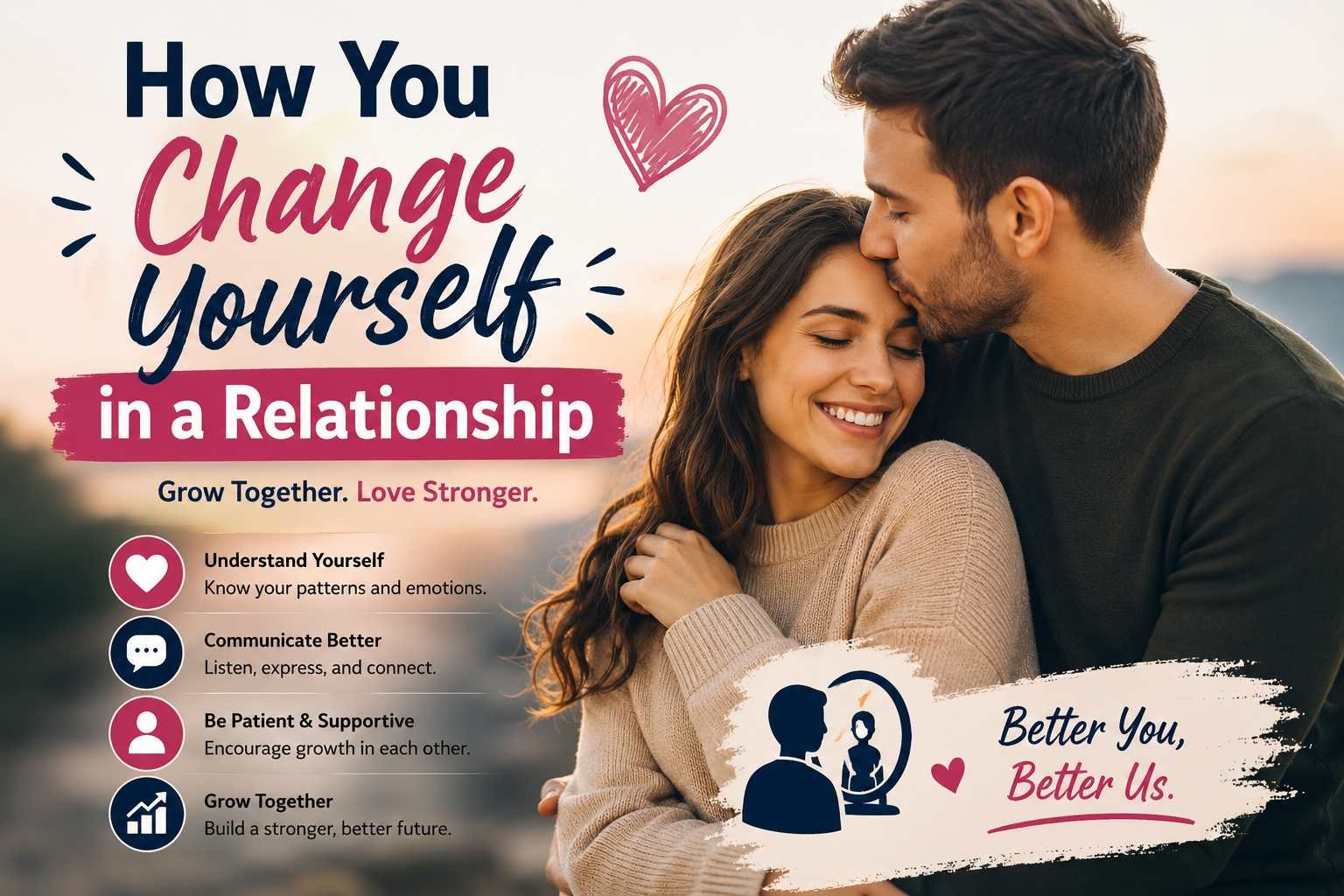
Learning how you change yourself in a relationship can be a vital part of building a stronger, healthier partnership. Every relationship brings opportunities to communicate better, become more understanding, and recognize habits that may affect the person you love. However, changing for a relationship does not mean abandoning your personality, values, goals, or identity.
A healthy relationship encourages both partners to grow while still allowing them to remain individuals. You may become more patient, improve your communication, express emotions better, or learn to compromise. These changes strengthen your connection without forcing you to become someone else.
The key is understanding the difference between personal growth and changing simply to gain someone’s approval. When changes align with your values and well-being, your relationship becomes a place where both people thrive.
What Does Changing Yourself in a Relationship Really Mean?
When people talk about changing themselves for a partner, they usually fall into two distinct categories:
- Positive Behavioral Adjustments: Improving habits that negatively affect the relationship—such as working on active listening instead of becoming defensive during arguments, or developing better conflict-resolution skills.
- Unhealthy Identity Loss: Giving up core parts of yourself out of fear that your partner will leave. Pretending to enjoy things you dislike, abandoning friends, or ignoring your values to keep someone happy gradually destroys your sense of self.
Why Do People Change in Relationships?
Relationships naturally influence the people involved. When two individuals share their lives, they learn from one another and adapt to shared experiences:
- Natural Growth: You might discover new interests, gain confidence through encouragement, or learn to be more patient.
- Skill Building: If you grew up avoiding conflict, a healthy relationship teaches you that communication is safer and more productive than silence.
- Overcoming Fear: Independent individuals learn that accepting emotional support is a strength, not a weakness.
8 Healthy Changes You Can Make for a Relationship

1. Improve Your Communication
Explain your feelings, needs, concerns, and expectations clearly rather than expecting your partner to mind-read. Use “I” statements (e.g., “I feel overlooked when we make plans without discussing them together”) instead of accusatory statements (e.g., “You never care about me”).
2. Become a Better Listener
Listen to understand rather than to respond. Put away distractions, ask clarifying questions, and avoid the immediate urge to defend yourself.
3. Learn to Manage Your Emotions
Emotional regulation isn’t about suppressing feelings like anger, jealousy, or frustration; it’s about expressing them constructively without resorting to yelling or stonewalling.
4. Practice Patience
Recognize that your partner has different habits, preferences, and emotional styles. Patience gives reasonable differences room to exist without turning them into daily conflicts.
5. Master the Art of Compromise
Decisions cannot always revolve around one person. Healthy compromise requires both partners to make mutual adjustments regarding schedules, finances, and social commitments.
6. Practice Emotional Vulnerability
Open up about sadness, insecurity, or fear. Sharing these deeper emotions builds lasting intimacy and helps your partner understand your motivations.
7. Take Responsibility for Mistakes
Emotional maturity means saying, “I was wrong.” Acknowledge your contribution to a problem and offer a sincere apology that includes a commitment to do better next time.
8. Stop Keeping Score
Avoid treating the relationship like a competition. Tracking who apologized first, paid for dinner, or initiated conversations only breeds resentment over time.
How to Change Without Losing Your Identity

A healthy relationship should never require you to erase who you are. To evaluate if a change is healthy, ask yourself this core question:
“Am I changing because I genuinely believe this will make me a better person, or am I changing because I am afraid my partner will reject me?”
Healthy Growth vs. Unhealthy Change
| Sign of Healthy Growth | Sign of Unhealthy Change |
| Communicating clearly and setting firm boundaries | Hiding your opinions to avoid arguments |
| Apologizing when appropriate and learning from mistakes | Constantly apologizing for having basic needs |
| Feeling confident expressing your needs and values | Hiding your true feelings to keep your partner happy |
| Maintaining friendships, hobbies, and personal goals | Giving up friends, passions, or goals to satisfy your partner |
| Making changes voluntarily for self-improvement | Changing out of fear, pressure, or feeling “never good enough” |
Evaluating Your Habits and Boundaries

Setting Healthy Boundaries
Growth and boundaries must coexist. Setting a boundary protects your well-being while keeping communication constructive:
- “I want to talk about this, but I am not comfortable continuing the conversation while we are yelling.”
- “I love spending time together, but I also need dedicated time for my friends and personal interests.”
How to Know Which Habits to Change
Ask yourself these four questions to filter good feedback from controlling behavior:
- Does this behavior hurt my partner? (If so, it deserves attention.)
- Does this behavior hurt me? (Working on personal habits benefits both you and the relationship.)
- Would I want to change this even if I were single? (If yes, it represents personal self-growth.)
- Is my partner asking for growth or control? (Asking for respectful dialogue is growth; dictating who you can talk to is control.)
How to Make Lasting, Authentic Changes
- Focus on Specific Goals: Replace vague promises like “I’ll communicate better” with concrete actions like “I will tell my partner when something bothers me instead of holding it in.”
- Practice Self-Awareness: Pay attention to how you react during arguments. Recognizing patterns like getting defensive or pulling away is the first step toward breaking them.
- Measure Progress, Not Perfection: Accept that building new habits takes time. Focus on overall growth rather than expecting flawless behavior immediately.
Frequently Asked Questions
Is it normal to change yourself in a relationship?
Yes. People naturally adapt through relationships. Healthy changes include clearer communication, patience, compromise, and heightened emotional maturity, provided you don’t lose your core identity.
Should I change my personality for my relationship?
No. You should never change your fundamental personality for a partner. However, working on specific behaviors or communication styles that harm the relationship is normal and healthy.
What should I never change for someone I love?
Never sacrifice your core moral values, healthy boundaries, close friendships, personal career goals, or basic sense of self-worth to keep a partner happy.
Conclusion:
Growth in a relationship should never be a one-sided expectation or a form of self-abandonment. The strongest partnerships consist of two individuals who respect each other’s boundaries, grow together through honest communication, and support each other’s freedom to remain authentically themselves.