
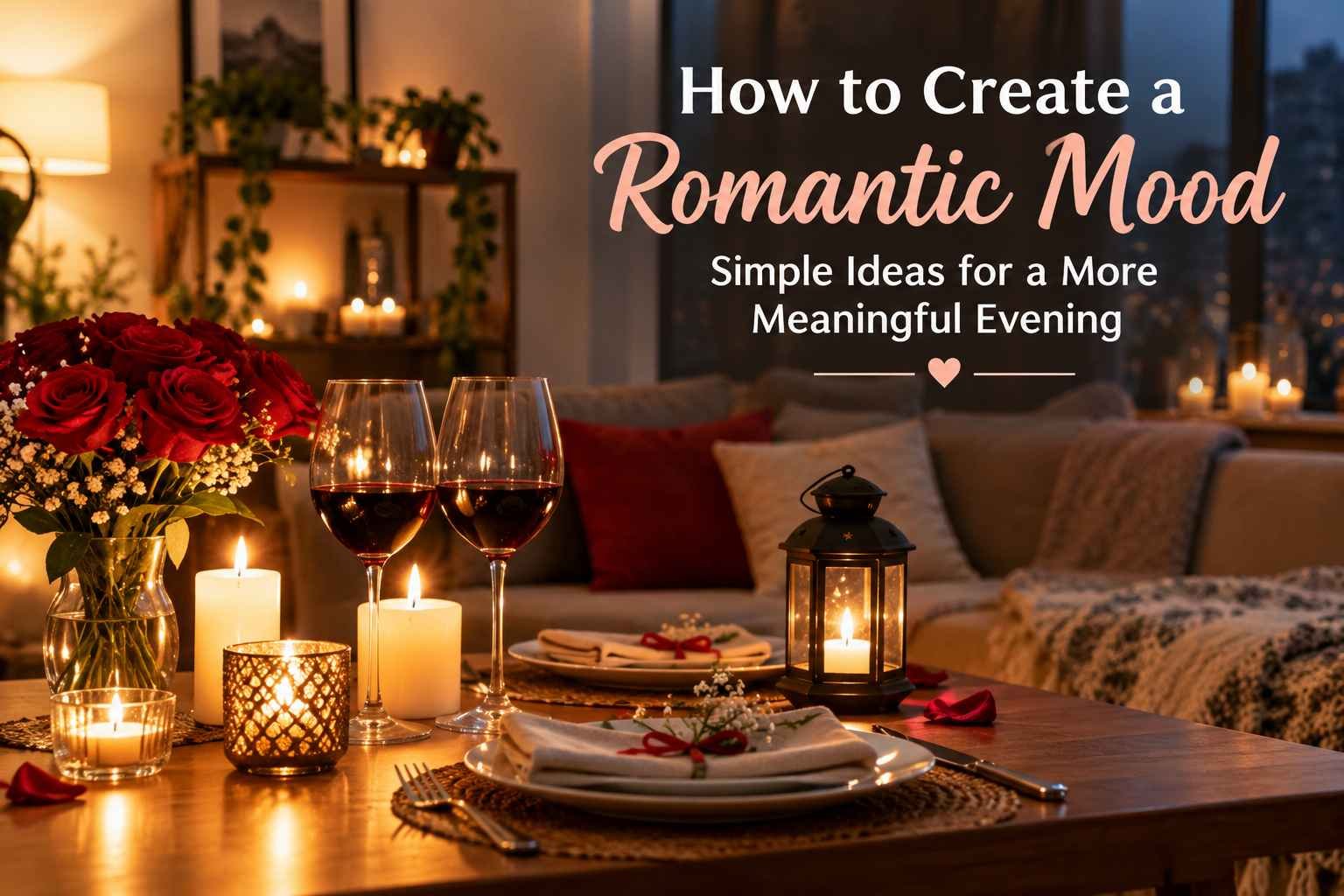
How to create a romantic mood doesn’t have to mean booking an expensive restaurant, buying a dozen roses, or planning a flawless evening. Often, the best moments come from small choices that help two people feel relaxed, noticed, and close. A favorite meal, a warm room, a thoughtful question, or a few hours without distractions can make an ordinary night feel different.
Romance also looks different from one couple to another. One person may love candlelight and music; another may feel most connected on a quiet walk or while cooking together. The point is not to copy a movie scene. It is to make space for attention, comfort, and genuine affection. Use the ideas below as a starting point, then shape them around what you both enjoy.
Begin with the feeling you want to create
Before choosing flowers or turning on music, think about the kind of evening you want. Do you want it to feel playful, peaceful, elegant, nostalgic, or spontaneous? A clear intention makes planning easier. It also helps you avoid piling on decorations that do not suit the two of you.
A romantic evening can be quiet. It can be a simple dinner after a busy week or a walk around a familiar neighborhood. What makes it feel special is often the sense that someone took time to think about what the other person would enjoy.
Ask your partner what helps them feel appreciated. You do not need to reveal every detail of a surprise. A question like, “Would you rather have a cozy night in or go somewhere new?” gives you useful direction while keeping the plan flexible.
How to create a romantic mood through conversation
A meaningful atmosphere starts with how you treat each other. Make room for conversation that is more than a review of schedules, chores, or work. Ask about a moment from the week that made your partner smile, something they are looking forward to, or a memory you both enjoy revisiting.
Listen to the answer without rushing to fix a problem or redirect the conversation. Put your phone away, make eye contact, and respond with curiosity. If your partner has had a difficult day, they may appreciate being heard more than being surprised with an elaborate plan.
You can also bring a little lightness into the evening. Share a funny story, play a question game, or talk about a place you would like to visit together. Gentle humor and shared memories can help both people feel at ease.
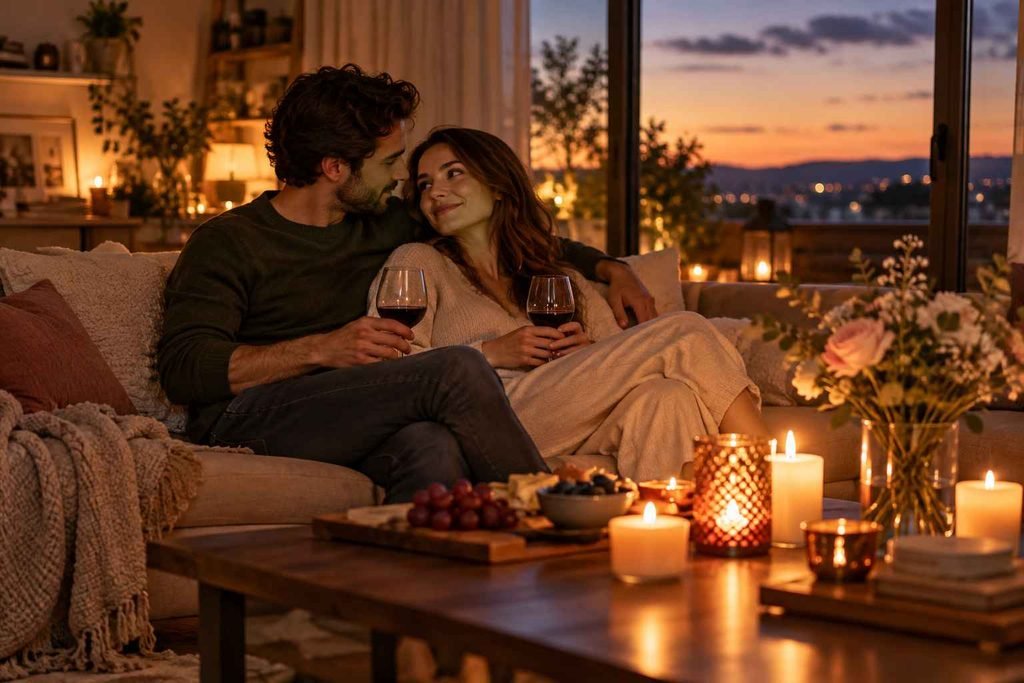
Set the scene with a few thoughtful details
Your surroundings can help signal that the evening is different from a routine night, but you do not need to transform the whole room. Tidy the space where you plan to spend time, clear away distracting clutter, and choose one or two details that feel personal.
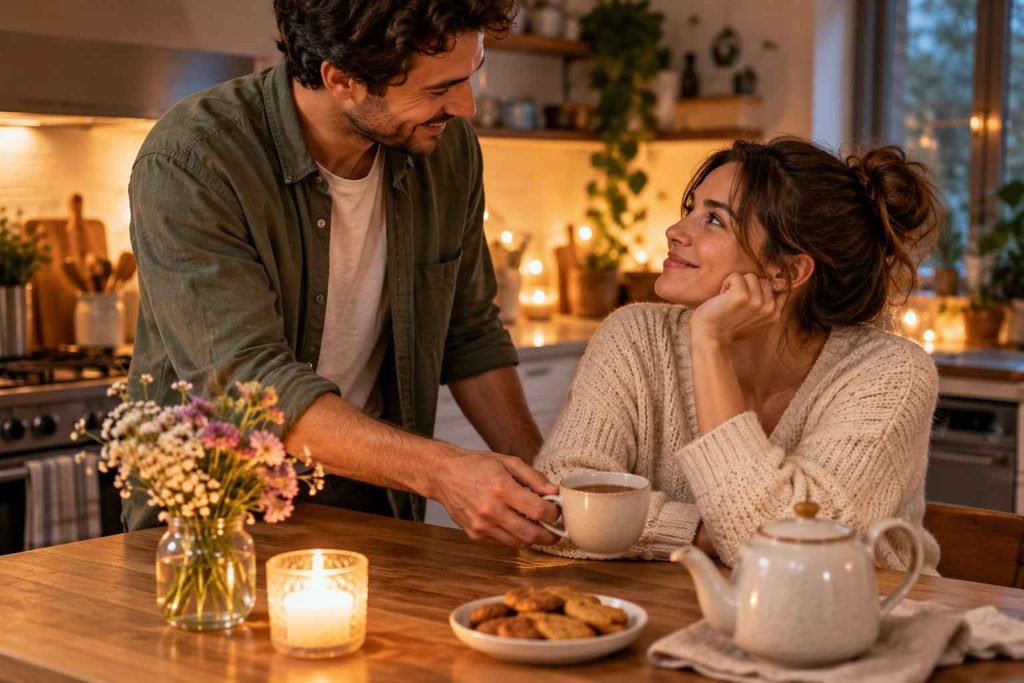
Fresh flowers are one option, but they are not essential. A clean table, comfortable blankets, a favorite dessert, or a small framed photo from a trip can make a room feel more considered. Use things you already have when possible. A familiar space can feel especially romantic when it is arranged with care.
Think about comfort as well as appearance. Make sure the room is warm enough, the seating is comfortable, and there is space to move around. If you are planning dinner, set out what you need in advance so you are not repeatedly leaving the conversation to find plates or utensils.
Keep the décor simple. Too many decorations can make a room feel crowded or staged. One small centerpiece, a soft throw, and a clean surface may be all the change you need.
Use lighting to soften the atmosphere
Light has a strong effect on how a room feels. Bright overhead lights can make a relaxed evening feel like another workday. Try switching them off and using a shaded lamp, indirect lighting, or a few candles instead.
If you use candles, place them on a stable surface away from curtains, pets, children, and anything flammable. Never leave an open flame unattended. Battery-powered candles can offer a similar glow when safety or convenience is a concern.
Avoid making the room so dark that it becomes difficult to eat, read, or talk comfortably. A combination of gentle light sources often works better than a single very bright or very dim one. Warm bulbs can also make a room feel more inviting without requiring any special setup.
How to create a romantic mood with lighting is less about choosing a particular color or buying new lamps and more about reducing glare. Move a lamp closer to the seating area, turn off the television if it is not part of the plan, and let the room feel calm rather than brightly lit.
Choose music that feels natural
A playlist can help fill quiet moments, but it should support the evening rather than dominate it. Choose music you both like, perhaps songs connected to a trip, a celebration, or a shared memory. If you are unsure, use gentle background music at a low volume.
You could make a short playlist together in advance, or take turns choosing a few songs. That gives each person a say and may lead to a conversation about why certain music matters. If you are cooking, upbeat music can make the preparation feel like part of the date.
Pay attention to the room and activity. Instrumental music may suit conversation, while familiar songs may work well for a casual dinner. A quiet room is also perfectly fine if neither of you wants background sound. The best choice is the one that lets you enjoy each other’s company.
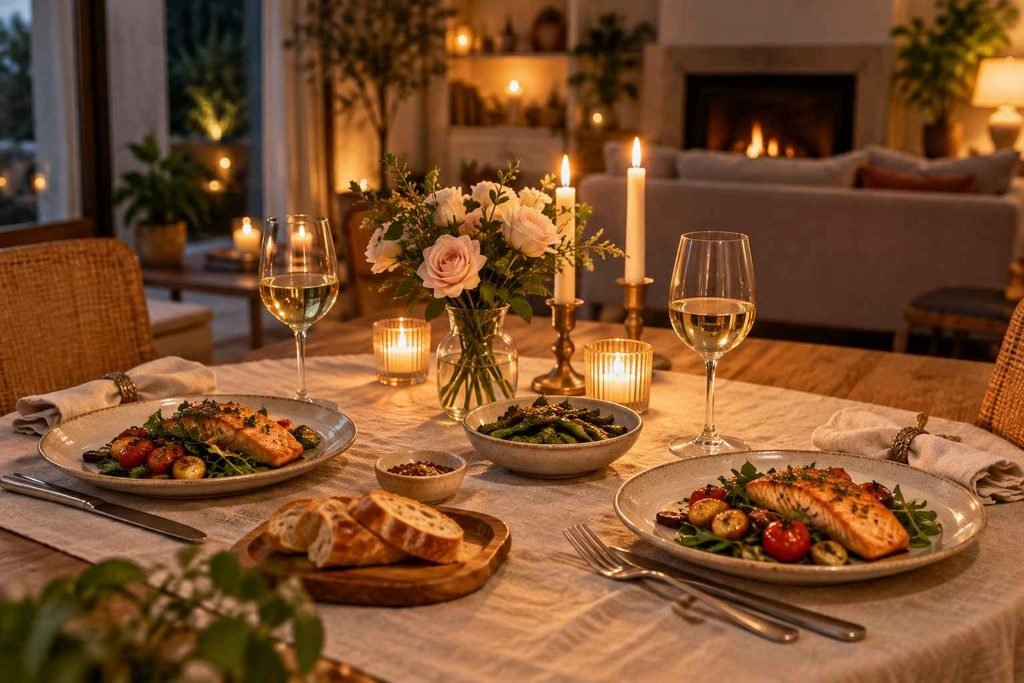
Make food part of the experience
A meal does not have to be complicated to feel special. Choose something you both enjoy and can prepare without spending the entire evening in the kitchen. If cooking together is fun for you, make the preparation part of the plan. If it tends to create stress, order from a favorite restaurant or prepare part of the meal earlier.
Consider your partner’s preferences and dietary needs. A thoughtful choice is more meaningful than a menu that looks impressive but leaves someone uncomfortable. You might make a favorite pasta dish, assemble a picnic, serve a snack board, or set out dessert and tea after dinner.
Small touches can make an everyday meal feel more intentional. Use real plates instead of eating straight from containers, pour drinks into glasses, and sit at the table rather than in front of separate screens. If you usually eat in a hurry, take your time.
A shared meal can be relaxed and imperfect. If something burns or arrives late, try not to let the mishap take over the evening. Laugh about it, find a simple alternative, and return to the reason you planned the time together.
Add a personal touch
Thoughtful gestures work best when they reflect the person receiving them. You could write a short note, pick up a snack your partner likes, bring out a board game you both enjoy, or plan an activity tied to a shared memory. It does not have to cost much. A detail that shows you were paying attention can matter more than a grand gesture.
Use your knowledge of your partner’s everyday life. If they have had a demanding week, offer to handle a chore so they can relax. If they enjoy being outdoors, suggest a walk somewhere peaceful. If they like to laugh, plan a playful activity rather than aiming for a formal, serious date.
How to create a romantic mood through a personal gesture is simple: choose something that says, “I know you.” It might be a favorite dessert, a song you both remember, or a note that names something you appreciate. Keep it sincere and specific. A brief “I loved how you made me laugh on Tuesday” often feels more personal than a generic compliment.
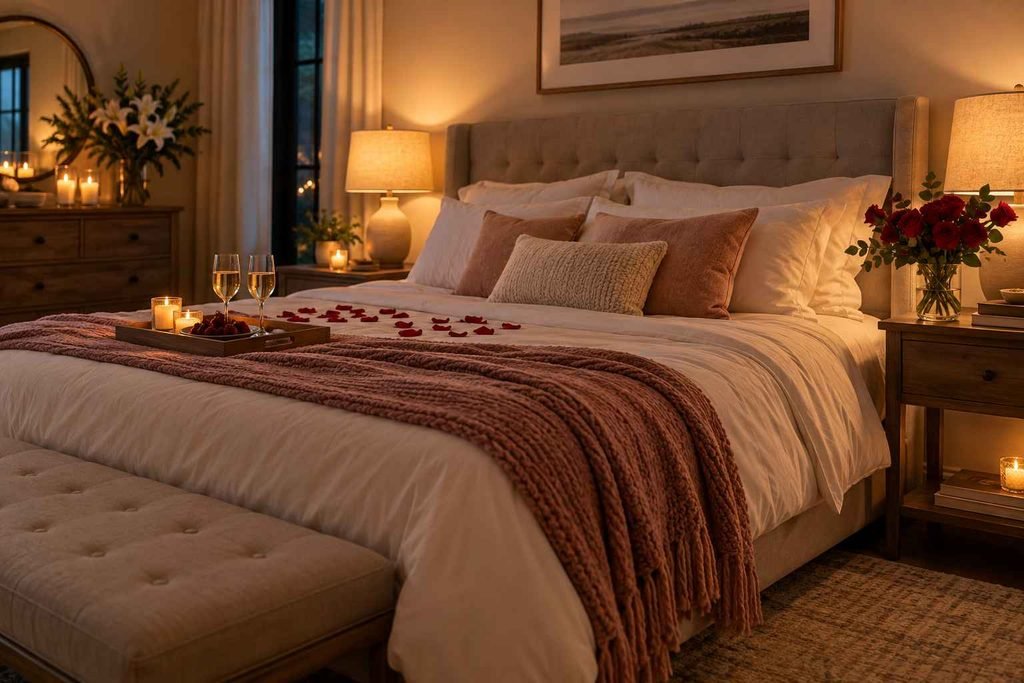
Make space for touch and affection
Affection can help partners feel close, but it should always feel welcome to both people. A hand held across the table, a warm hug, sitting close on the sofa, or a gentle touch on the shoulder may feel natural. Follow your partner’s cues and respect their boundaries.
People show and receive affection in different ways. Some enjoy physical closeness; others feel most cared for through kind words, practical help, or uninterrupted attention. Talk openly about what feels good to each of you rather than assuming that one gesture suits everyone.
If you have both been busy or stressed, start with small moments of connection. Ask whether your partner would like a hug, offer to sit together, or suggest a short walk. There is no need to make affection feel like a performance or an obligation.
Use scent and other sensory details lightly
A familiar scent can make a space feel inviting, but keep it subtle. Fresh air, clean sheets, a favorite candle, or the aroma of dinner may be enough. Strong fragrances can bother people with allergies, migraines, asthma, or scent sensitivities, so check what your partner prefers.
Comfortable textures can also shape the evening. Soft blankets, cushions, clean bedding, or a warm drink can make it easier to settle in. Think about temperature and noise, too. Close a window if outside sounds are distracting, or open one if fresh air would feel better.
How to create a romantic mood with sensory details depends on balance. The room should feel pleasant without overwhelming your partner with strong perfume, loud music, or too many competing decorations. A few gentle comforts usually do more than a long list of additions.

Plan an activity you can enjoy together
A romantic date does not have to involve sitting across from each other for hours. Shared activities can make conversation easier and create a memory you can return to later. Choose something that fits your energy and interests.
Ideas for a low-key evening include:
- Cooking a familiar meal together
- Taking a walk through a favorite neighborhood
- Playing a board game or a two-player card game
- Looking through photos from a trip
- Making a playlist or planning a future day out
- Watching a film you both enjoy, with phones set aside
- Having dessert outside or on a balcony
If you want to try something new, keep the plan manageable. A short class, a new recipe, or a visit to a nearby place can feel exciting without turning the evening into a complicated schedule. Leave a little unplanned time so you can follow the conversation wherever it goes.
How to create a romantic mood on a budget often comes down to choosing an activity that makes you both feel present. A walk, homemade dessert, or shared playlist can be more memorable than an expensive reservation if it gives you time to connect.
Adjust the plan to the occasion
A birthday, anniversary, or Valentine’s Day may call for a little more planning, but the same basic ideas still apply: think about what your partner enjoys, prepare the practical details, and make the time feel personal. A celebration does not need to be elaborate to be meaningful.
For an ordinary weeknight, keep things simple. Prepare a favorite snack, light a lamp, and spend an hour talking or watching something together. If you have children or other responsibilities, you might plan a shorter moment after they are asleep or arrange a time when you can focus without interruption.
Long-distance couples can create a shared experience over a video call. Eat the same kind of meal, watch a film at the same time, or each bring a question to discuss. If a call is not possible, a voice message or a carefully chosen note can still help someone feel remembered.
How to create a romantic mood when circumstances are not perfect is to work with what is available. You may not have a quiet home, much spare time, or money for a special outing. A thoughtful conversation, a kind message, or ten minutes of focused attention can still be meaningful.
Keep expectations comfortable
It is easy to picture a perfect evening and feel disappointed when real life does not match it. Try to focus on connection rather than a flawless result. A romantic night can include a late meal, a burnt dessert, or a change of plans. What matters is how you respond to each other.
Avoid treating romance as a test your partner has to pass. If you are planning a surprise, choose something they are likely to enjoy and leave room for their preferences. If one of you is tired, stressed, or not in the mood, be willing to adjust the plan.
You can also create romance together rather than taking responsibility for every detail alone. Ask your partner to choose the music, bring a dessert, or suggest an activity. Shared planning can make the evening feel more natural and help both of you feel included.
Frequently asked questions
What is the easiest way to make an evening feel romantic?
Start with focused attention. Put away distractions, choose a comfortable setting, and do something your partner enjoys. A favorite meal, a walk, or a sincere conversation can make the evening feel special without much preparation.
Do I need candles or flowers?
No. Candles and flowers are optional details, not requirements. Try soft lighting, a tidy space, music you both like, or a personal gesture instead. The best choices are the ones that suit your partner and make both of you comfortable.
How can I plan a romantic night at home on a budget?
Use what you already have. Make a simple meal, set the table, choose a playlist, and plan an activity such as a game, a walk, or looking through old photos. The time and attention you give each other are more important than what you spend.
What if my partner does not enjoy surprises?
Keep the plan low-pressure or involve them in choosing it. You can still make an ordinary evening feel thoughtful by preparing a favorite snack, suggesting a shared activity, or asking what would help them unwind.
How to create a romantic mood if we are both tired?
Keep the plan gentle and short. Make tea, sit together without screens, share a snack, or take a brief walk. If either of you needs rest, reschedule the bigger plan. Being considerate of each other’s energy is part of feeling close.
Conclusion
How to create a romantic mood is ultimately about making someone feel seen, comfortable, and valued. Set a welcoming scene, choose an activity you both enjoy, and give each other your attention. Keep the gestures personal and the expectations flexible. You do not need a perfect room or an elaborate plan; a few considerate choices can turn an ordinary evening into a meaningful one.