

A handfasting ceremony script gives a couple a clear way to include the symbolic tying of hands in a wedding, vow renewal, or commitment celebration. The words can explain what the ritual means, invite the couple to exchange promises, and guide the officiant or chosen guests through each step. The best version feels personal and comfortable, whether the ceremony is spiritual, secular, or somewhere in between.
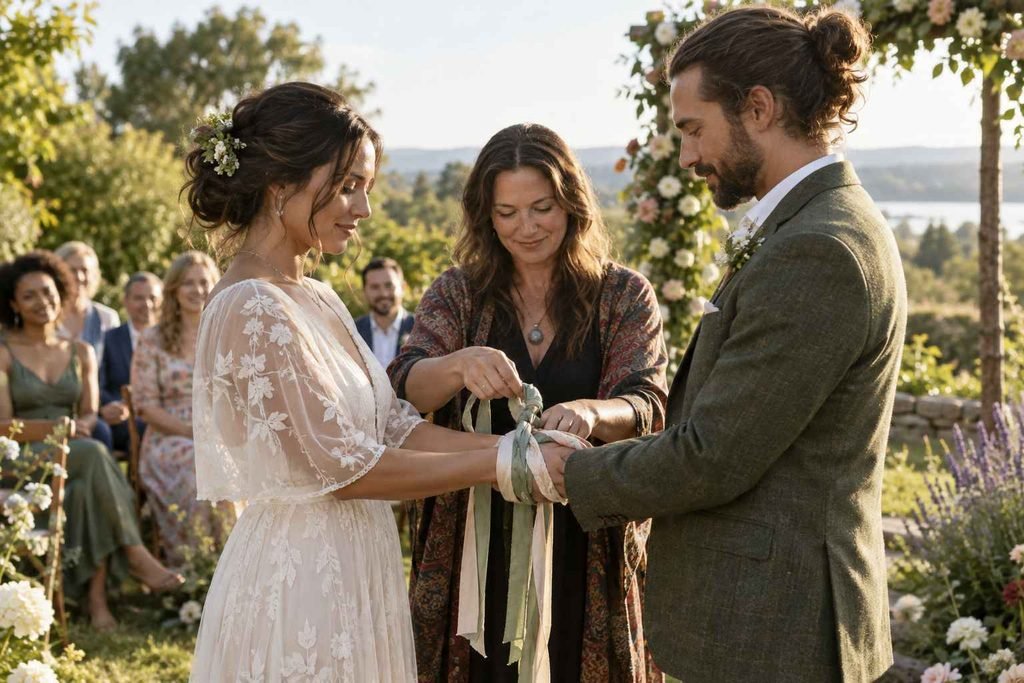
Handfasting can be simple: two people join hands while a ribbon or cord is gently placed around them. Some couples speak vows during the binding; others do it before or after. There is no single script every couple must follow. Use the sample below as a starting point, then change the wording, roles, and ritual details to fit your beliefs and relationship.
What handfasting can symbolize?
In a modern ceremony, handfasting commonly represents two people choosing to join their lives. The ribbon or cord is a visible symbol of their promises, while the words spoken during the ritual express what the couple intends to build together. Some couples use one cord; others choose several ribbons with colors or materials that hold personal meaning.
The term has historical uses that are not all identical to the modern wedding ritual. The Dictionary of the Scots Language records an earlier Scottish use connected with betrothal, while present-day ceremony guidance describes handfasting as a customizable symbolic gesture. It is better to avoid presenting every modern ribbon ritual as one unchanged ancient custom. Highland Council
The meaning can be spiritual, cultural, personal, or simply aesthetic. Some couples include it as part of a Pagan or Druid rite; others add it to a civil, humanist, or family-centered ceremony. If a tradition is important to you, discuss its meaning with a celebrant or community leader who understands it.
Choose the kind of ceremony you want
Before writing, decide how you want the moment to feel. A short ritual can be warm and straightforward. A more formal version may include a reading, a blessing, family participation, or several cords. Neither approach is more meaningful by default; choose the one that reflects you.
Consider these questions together:
- Do you want the ritual to be religious, spiritual, secular, or a blend?
- Should the officiant explain the symbolism to guests?
- Will you speak personal vows while your hands are bound?
- Would you like a relative or friend to place the cord?
- Do you want to use one ribbon, several ribbons, or a family textile?
- Should the cord remain tied, or be removed after the vows?
A handfasting ceremony script should give each person a clear role. The couple should know when to face one another, when to join hands, and whether to repeat any words. The person tying the cord should know how it will be placed and when to step away. A quick rehearsal can prevent awkward pauses and make sure the ribbon is comfortable.
Select a cord or ribbon
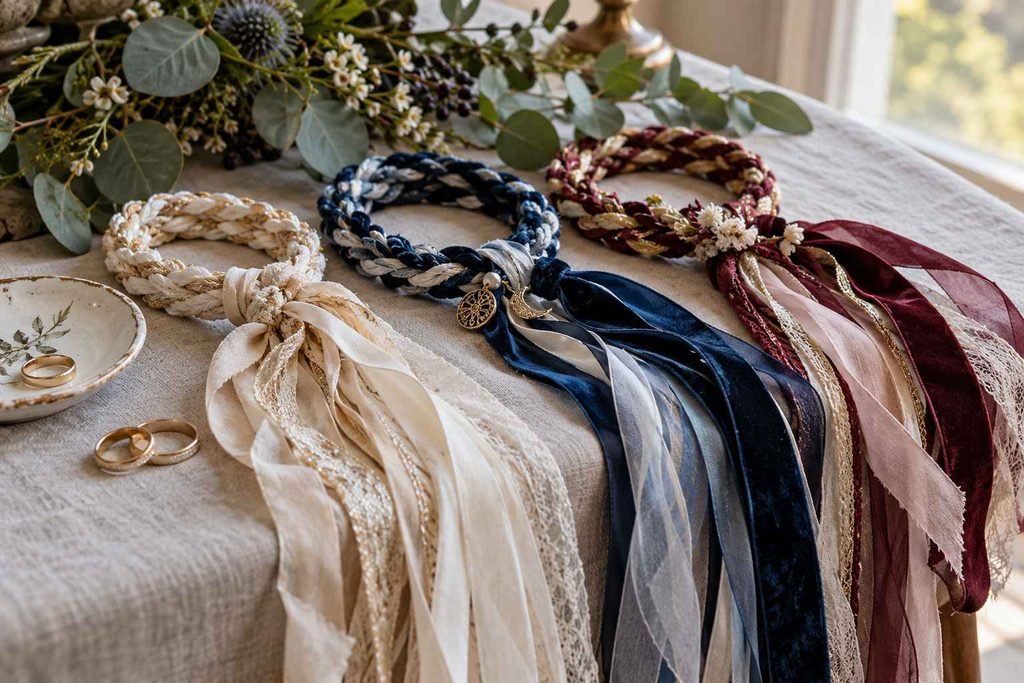
Choose a material that is soft, wide enough to handle easily, and long enough to wrap without pulling. A length of ribbon, braided cord, woven fabric, or tartan can work. If you use several cords, check that they do not tangle and that the colors look good together.
Think about how the fabric will feel against skin and clothing. Avoid very thin string, sharp embellishments, or tight knots. The goal is a symbolic binding, not a physical restraint. The couple should be able to move their hands comfortably and release the cord easily.
You can assign personal meanings to colors, but you do not have to follow a universal color chart. A ribbon in a favorite color, a piece of fabric from a family garment, or a cord chosen together may feel more meaningful than a color selected because a website says it has a fixed meaning.
Sample handfasting ceremony script
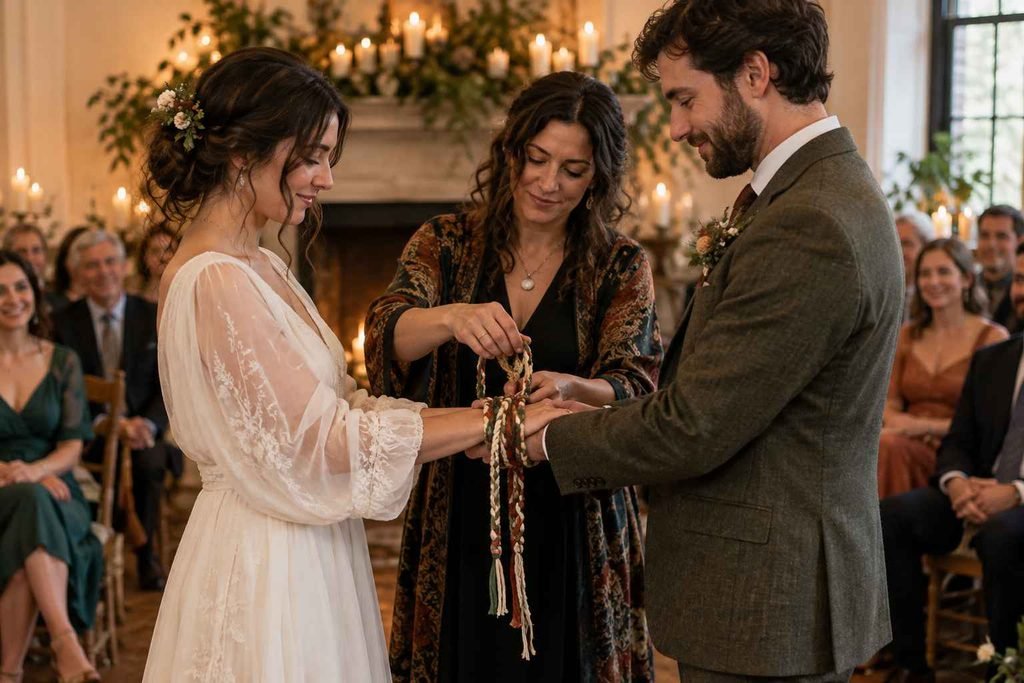
The following original sample is designed for a secular or broadly inclusive ceremony. Replace the bracketed details, remove any lines that do not suit you, and adjust the pacing to match your wedding.
1. Introduction
Officiant:
“[Name] and [Name] have chosen to include a handfasting in their ceremony. In this moment, they will join hands as a reminder of the promises they make and the life they are choosing to build together.
“The cord we use today is a symbol. It does not create the bond between [Name] and [Name]; their care, trust, and daily choices give that bond its meaning. We gather as witnesses to support the promises they make.”
2. Invite the couple to join hands
Officiant:
“[Name] and [Name], please face one another and join hands in the way that feels comfortable.”
Stage direction: The couple may hold one hand each, clasp both hands, or rest their hands together. The officiant or chosen guest should be able to place the ribbon without forcing the couple’s wrists into an uncomfortable position.
3. Optional words about the cord
If the cord has a personal story, the officiant can briefly explain it here.
Officiant:
“This ribbon was chosen by [Name] and [Name] because [brief personal meaning]. As it rests around their joined hands, may it remind them that a lasting partnership is made through patience, honesty, laughter, and care.”
If the ribbon has no particular story, use a simpler line:
“May this cord serve as a reminder of the promises spoken here and the support offered by everyone gathered.”
4. Place the ribbon
Officiant or chosen guest:
“May I place the cord around your joined hands?”
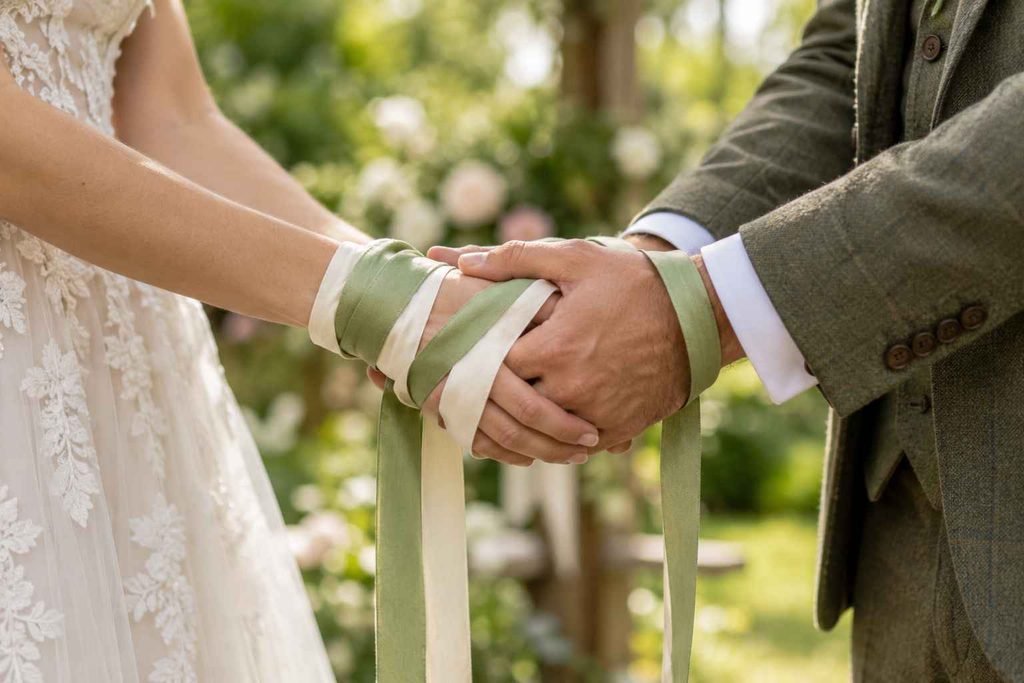
Stage direction: Wait for the couple’s response. The ribbon is placed loosely around their hands. The person tying it may make a simple knot or cross the ends, leaving enough room to remove it safely.
5. Exchange promises
The couple may use personal vows, repeat short promises, or answer questions from the officiant.
Officiant:
“[Name], do you choose [Name] as your partner, promising to meet them with honesty, respect, and care as you build your life together?”
Partner 1:
“I do.”
Officiant:
“[Name], do you choose [Name] as your partner, promising to meet them with honesty, respect, and care as you build your life together?”
Partner 2:
“I do.”
For a less formal version, each person can speak a personal promise:
Partner 1:
“I promise to keep learning who you are, to speak with kindness, and to stand beside you through change. I will celebrate your joys, listen when life is difficult, and make room for both of us to grow.”
Partner 2:
“I promise to meet you with patience, honesty, and affection. I will value the life we make together, support your hopes, and keep choosing our partnership in the small moments as well as the important ones.”
6. Words as the cord is tied
Officiant:
“These hands are joined by choice, and the promises they represent belong to [Name] and [Name]. May they offer comfort in difficult moments, encouragement in times of change, and joy in the everyday life they share.”
7. Release the cord
Officiant:
“[Name] and [Name], you may now gently release your hands. The ribbon can be removed, but the promises you have made remain yours to carry.”
Stage direction: The officiant or chosen guest loosens the knot and removes the cord. Alternatively, the couple can slide their hands free if the ribbon is tied loosely and this has been rehearsed.
8. Close the ritual
Officiant:
“May your partnership be shaped by the care you have shown here today. May you continue to meet one another with curiosity, kindness, and respect. Let the people gathered here celebrate the promises you have made.”
The officiant can then move into the next part of the ceremony, such as the ring exchange, declaration, or kiss.
How to personalize your words
A personal detail can make a ceremony feel like it belongs to you. Keep it specific and brief. You might mention a value you share, a quality you admire in one another, or a promise that reflects your real life together.
For example, a couple who loves traveling might include a line about staying curious through unfamiliar places. Partners who have built a home together might speak about making room for rest, welcome, and humor. If you have children, you may want to include a family promise that acknowledges the life you are creating together.
Try not to overload the script with every meaningful story from your relationship. One or two details are usually enough. A ceremony is easier for guests to follow when the officiant’s explanation is concise and the couple’s promises remain the focus.
When adapting a handfasting ceremony script, read it aloud rather than judging it only on the page. If a line feels stiff or unlike you, replace it with words you would naturally say. Short sentences often sound more sincere than elaborate language.
Optional family participation
A relative or friend can bring forward the cord, read a short blessing, or help place the ribbon. If more than one person participates, assign roles in advance and keep the movement simple. The moment should feel inclusive without making the couple wait while several people take turns tying multiple knots.
If children are part of the ceremony, they could hand the cord to the officiant or choose a ribbon together with the couple. Participation should be comfortable and age-appropriate; there is no need to make a child responsible for the success of the ritual.
Practical tips for the ceremony
A few simple preparations can make the moment run smoothly:
- Practice the hand position. Decide whether you will hold one hand or both, and ask the person tying the cord to rehearse.
- Keep the ribbon loose. It should not pinch, restrict movement, or catch on clothing.
- Check the microphone. Guests should be able to hear the officiant and the couple’s responses.
- Coordinate with your photographer. Let them know when the cord will be placed and removed so they can be ready.
- Have a backup plan. Keep an extra ribbon nearby in case the first one tangles or breaks.
- Confirm venue rules. Some locations may have restrictions on open flames, outdoor setups, or particular materials.
- Make the transition clear. Tell the officiant what happens immediately after the ritual so the ceremony continues without confusion.
If your ceremony includes faith-specific language, cultural practices, or a particular spiritual tradition, consult someone knowledgeable in that tradition. A generic script can provide structure, but it should not replace guidance from a community or celebrant when the details matter to you.
Legal and ceremonial considerations
A handfasting can be a symbolic element within a wedding, but its legal effect depends on where you marry and who officiates. Do not assume the ribbon ritual by itself creates a legally recognized marriage. Confirm the requirements with your local marriage authority and your officiant. Scottish local council guidance presents handfasting as a way to personalize a ceremony, including the option to speak vows while hands are tied; requirements for the legal marriage itself should still be checked with the relevant authority.
If you are marrying in Scotland or another place with particular ceremony rules, ask the registrar or authorized celebrant how the ritual fits into the legal proceedings. In other locations, you may need a separate civil or religious marriage ceremony for legal recognition. Rules vary, so rely on local official guidance rather than a general online script.
Frequently asked questions
What should an officiant say during handfasting?
The officiant can briefly explain what the cord means to the couple, invite them to join hands, guide the person placing the ribbon, and introduce the couple’s promises. Keep the explanation short enough that the ritual remains clear and personal.
How long should the ritual take?
A simple handfasting usually takes only a few minutes. A longer version may include readings, several ribbons, family participation, or personal vows. Rehearse once to check the timing and movement.
Can we write our own vows?
Yes. Many couples use personal vows or combine their own words with a few prompts from the officiant. Keep the promises realistic and meaningful to your relationship.
What kind of ribbon should we use?
Choose a comfortable material that is long enough to wrap loosely around joined hands and easy to untie. You might use ribbon, soft cord, braided fabric, or a family textile. Avoid thin or scratchy material and tight knots.
Can friends or family members participate?
Yes. A loved one can carry the cord, read a short passage, or help place it. Discuss the sequence with the officiant beforehand so everyone knows where to stand and when to move.
Is the ritual religious?
It can be, but it does not have to be. Some couples include handfasting in a Pagan or Druid ceremony; others use it as a secular symbol of commitment. Choose language that reflects your own beliefs and comfort.
How do we make a handfasting ceremony script feel personal?
Use a few details that are true to your relationship: a shared value, a promise you want to make, or the story behind the cord. Read the words aloud, revise anything that sounds unnatural, and keep the focus on the promises you are making.
Conclusion
A handfasting ceremony can be a simple, moving way to make commitment visible. Choose a cord that feels comfortable, decide what the ritual means to you, and give every participant clear directions. A thoughtful handfasting ceremony script provides structure, but your own promises are what make the moment yours. Keep the wording honest, the ritual easy to follow, and the focus on the life you are choosing to build together.