
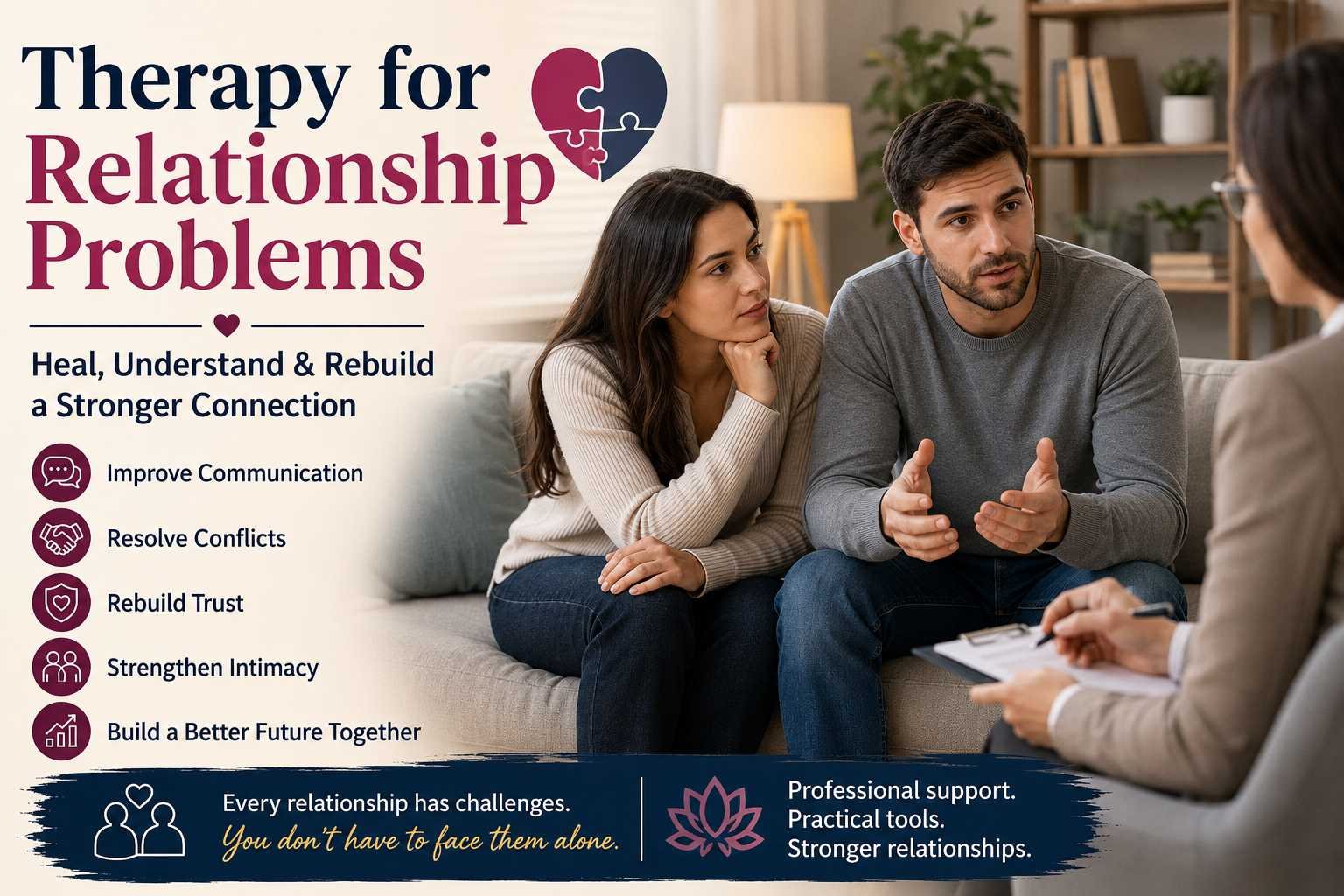
Ideally, both partners participate. Nevertheless, a single individual can still benefit from therapy for relationship problems when the other partner is not ready.
Individual therapy for relationship problems can help a person understand their reactions, communication habits, boundaries, expectations, and personal relationship goals.
This individual process may also help partners determine which changes they can make on their own to improve the dynamic.
If one partner eventually feels comfortable with the idea of couples counseling, that partner can consider moving to joint sessions with a properly trained therapist.
Therapy After Infidelity
Infidelity can cause damage to trust and emotional security in a partnership.
Some couples decide to separate after infidelity, while other couples choose to work toward rebuilding their relationship.
For couples who want to explore reconciliation, therapy for relationship problems can provide a safe environment for talking about what happened and understanding its impact.
The process may involve accountability, transparency, rebuilding trust, establishing clear boundaries, and addressing underlying relationship concerns.
There is no fixed timeline for recovering from betrayal. Both partners may need time to process difficult emotions.
Therapy Before Marriage
Relationship counseling is not only for couples experiencing serious problems. Pre-marital counseling helps couples build a solid foundation before committing.
Couples often discuss important topics such as:
- Finances and spending habits
- Family expectations and in-laws
- Daily communication styles
- Parenting and child-rearing values
- Division of household responsibilities
- Career goals and mobility
- Intimacy expectations
- Conflict resolution techniques
- Personal boundaries and alone time
- Long-term future plans
Having these conversations early can help couples understand their differences before those differences become sources of conflict.
When Therapy May Not Be Appropriate

Although counseling can be helpful for couples, there are circumstances where standard therapy for relationship problems may not be the safest or most appropriate first step.
For example, relationships involving physical violence, coercive control, or serious threats require specialized professional support and safety planning.
If someone is experiencing abuse or immediate danger, personal safety must always come before relationship repair.
A qualified professional can help determine what type of support is most appropriate for the specific situation.
Building a Healthier Relationship Outside Therapy
Professional counseling is only one part of improving a relationship.
Couples must also strengthen their connection through everyday habits between sessions.
- Make time for meaningful conversations instead of discussing only daily responsibilities.
- Express appreciation regularly so partners feel noticed and valued.
- Create opportunities to have fun together, as shared positive experiences help balance serious conversations.
- Respect personal boundaries and individual interests outside the relationship.
- Avoid assuming that a partner automatically understands every need, because healthy relationships require clear communication.
How Long Does Relationship Therapy Take?

There is no fixed timeline for therapy for relationship problems.
Some couples attend a small number of sessions to address a specific problem, while other couples participate in therapy for relationship problems for months or longer to handle complicated or long-standing concerns.
The overall timeline can depend on:
- The severity of the relationship problems
- How long the problems have existed
- The primary goals of the therapy
- The active participation level of both partners
- The specific therapy approach being used
- The progress made between counseling sessions
The main goal is not to attend therapy forever, but to gain the skills needed to maintain a healthy connection independently.
Signs That Therapy Is Helping
Progress may not always be dramatic at first. Sometimes improvement appears through subtle daily changes.
You might notice positive signs such as:
- Arguments become less frequent and less intense.
- Conversations become calmer and more constructive.
- Partners listen effectively to one another.
- Each partner understands the perspective of the other partner much better.
- Couples recover from disagreements much faster.
- Both partners feel more comfortable expressing genuine emotions.
- Mutual trust gradually improves over time.
- Partners enjoy spending quality time together again.
- Couples can discuss difficult topics without immediately escalating into a fight.
Frequently Asked Questions
What is the best therapy for relationship problems?
There is no single therapy approach that works best for every couple. Different evidence-based approaches may focus on communication, emotional connection, attachment, behavior, or recurring patterns. A qualified couples therapist can help determine the best approach based on the unique circumstances of the couple.
Can therapy save a relationship?
Therapy for relationship problems can help couples understand issues, improve communication, and develop healthier patterns, but counseling cannot guarantee that a relationship will remain intact. Both partners must be willing to participate and make positive changes. Sometimes therapy helps couples repair their bond, while in other situations it helps partners make healthy decisions about separating.
How do I know if my relationship needs therapy?
Consider seeking help if you experience recurring conflicts, communication problems, emotional distance, trust issues, or other concerns that you have been unable to resolve on your own. You do not have to wait until a relationship reaches a crisis point before asking for support.
Can couples therapy work if one person is resistant?
It can be difficult when one partner refuses counseling, but individual therapy for relationship problems can still provide useful support. The partner who attends can work on communication, boundaries, emotional responses, and personal goals. That individual progress can sometimes encourage the hesitant partner to participate later.
How long does couples therapy usually take?
The total length varies considerably based on individual needs. Some couples attend sessions for a specific short-term concern, while other couples need longer-term support. The therapist and the couple will periodically evaluate progress and adjust goals throughout treatment.
Is online relationship therapy effective?
Online counseling can be an effective option for many couples, particularly when busy schedules or transportation challenges make in-person sessions difficult. Its overall success depends on the needs of the couple, the qualifications of the therapist, and having a reliable connection.
Should we try therapy before breaking up?
If both partners are willing and the relationship is safe, therapy for relationship problems can clarify underlying issues and determine whether meaningful changes are possible. Counseling helps couples make thoughtful decisions rather than reacting purely out of anger or emotional exhaustion.
Conclusion
Therapy for relationship problems provides couples with an opportunity to understand their challenges, improve communication, rebuild broken trust, and develop healthier ways of connecting.
The right therapist can help couples identify negative patterns, communicate clearly, address unresolved concerns, and build practical strategies for handling future disagreements.
However, successful therapy for relationship problems requires active participation, honesty, patience, and a genuine willingness to practice new skills outside of session times.
Whether you are experiencing communication difficulties, emotional distance, trust concerns, intimacy issues, or major life transitions, professional guidance can help you gain a clearer understanding of your partnership.
Ultimately, healthier relationships are built through consistent communication, mutual respect, emotional awareness, and daily effort. Therapy for relationship problems provides the necessary tools, but the everyday choices made by both partners are what turn those tools into lasting positive change.