
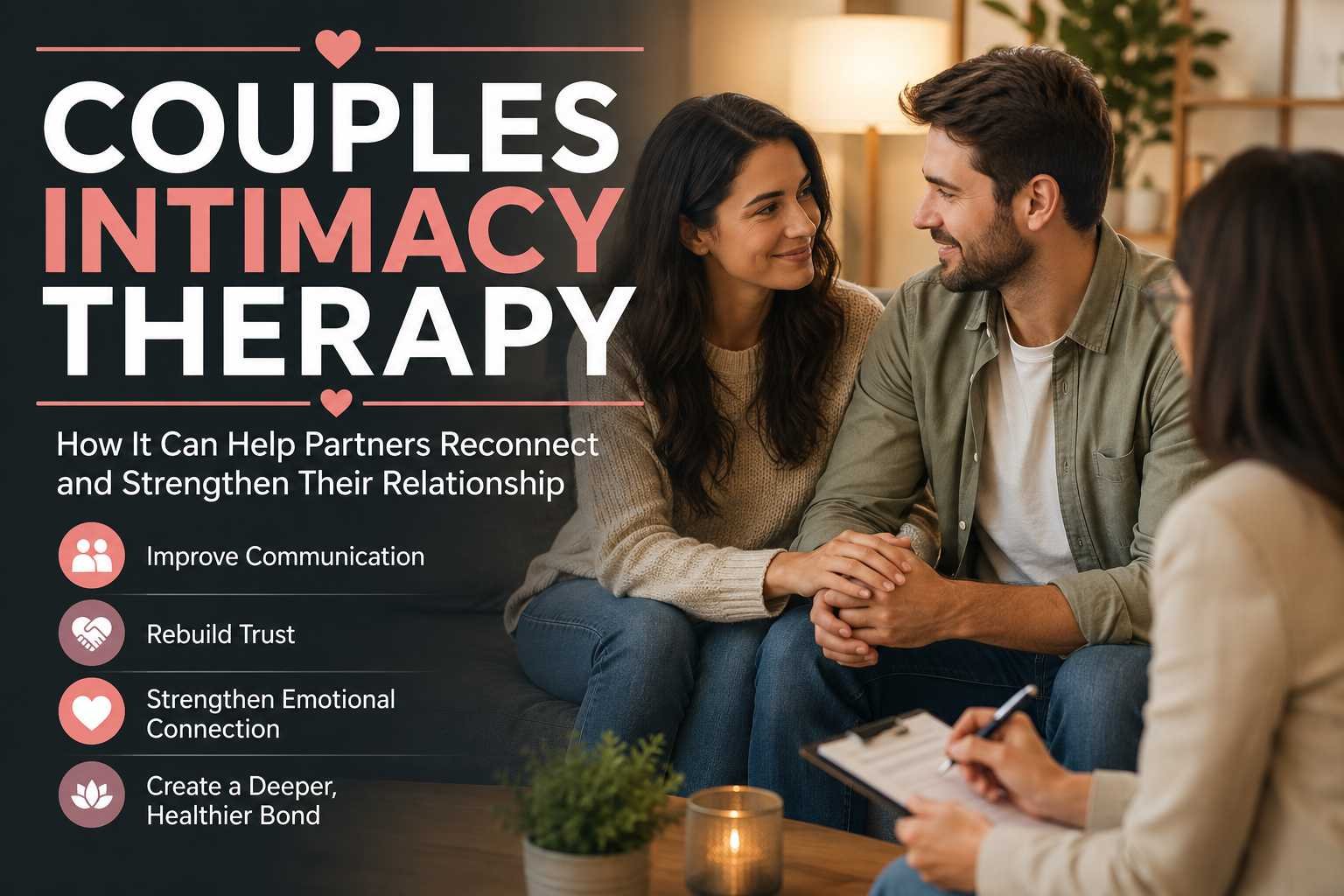
Relationships cycle through times of closeness, distance, stress, and change. When emotional or physical intimacy starts to slip, couples may feel apart even if they still care deeply for each other. Couples intimacy therapy can give a safe space where couples examine why the distance grows, improve how they talk to each other, rebuild trust, and learn better ways to come together again. Whether the problem is about closeness, physical affection, talking difficulties, unresolved fights, or big life changes, professional guidance can help couples understand one another and create realistic ways to make the relationship stronger.
What Is Intimacy in a Relationship?
Intimacy goes beyond physical affection or sexual connection. It is the feeling of closeness, trust, safety, and understanding that couples build over time.
Healthy intimacy can involve different areas, including:
- Emotional intimacy
- Physical intimacy
- Sexual intimacy
- Intellectual intimacy
- Experiential intimacy
- Communication and vulnerability
- Trust and emotional safety
A couple might hug and kiss a lot but still feel emotionally distant. Another couple may talk well, yet have trouble with physical or sexual connection. Knowing these kinds of intimacy can help couples spot where their relationship needs work.
Intimacy shifts as a relationship grows. Jobs, parenting, money worries, health issues, getting older, grief, moving, and other big life events can affect how close couples feel.
How Couples Intimacy Therapy Works
Couples intimacy therapy usually focuses on showing couples how patterns in their relationship shape their feelings, instead of putting blame on one person.
A therapist may ask both partners to talk about what they need from the relationship and what makes it hard to feel close. Sessions can include guided talks, communication drills, reflection, and ways to handle fights constructively.
The exact method depends on the couple’s situation and the therapist’s training. Some therapists focus a lot on the emotional bond, while others may use techniques meant for sexual issues, attachment problems, or communication skills.
The goal is usually not to decide who is right or wrong. Instead, therapy can help couples see what is happening between them and build healthier patterns.
Signs You May Need Help With Intimacy

Not every stretch of distance in a relationship means therapy is needed. Couples often see dips in intimacy during stressful times.
However, professional help may be worth thinking about when problems keep going or start to hurt satisfaction in the relationship.
Possible signs include:
1. You Feel Like Roommates
If talks revolve only around chores, schedules, work, children, or duties, couples may start feeling more like teammates than lovers.
2. Affection Has Decreased
If hugs, kisses, cuddles, hand-holding, or other affection drop a lot, one or both partners may feel unwanted or distant.
3. Communication Frequently Turns Into Arguments
Some couples avoid talking because every serious chat turns into a fight. Others keep having the same argument without finding a solution.
4. You Avoid Vulnerable Conversations
Emotional intimacy needs a level of vulnerability. If couples no longer feel safe talking about fears, letdowns, hopes, or needs, emotional distance can grow.
5. Physical or Sexual Intimacy Has Changed
Differences in desire, discomfort, resentment, stress, or talking problems can change sexual connection.
6. Resentment Has Built Up
Unresolved letdowns can slowly build resentment. Even small problems can feel much bigger when they pile up over time.
Common Reasons Couples Experience Intimacy Problems

There is rarely one reason for intimacy to drop. Usually, several things mix together.
Stress and Busy Schedules
Long work hours, parenting duties, household chores, and money worries can leave couples with little time or energy for each other.
When daily duties take over the relationship, intimacy may slip down the list of priorities.
Poor Communication
Couples may love each other but use different ways of talking. One may want to discuss problems right away, while the other needs time before speaking.
Without knowing these differences, normal fights can become emotionally exhausting.
Conflict
Repeated arguments that never get solved can make couples keep their guard up. When one expects criticism or rejection, they may stop being open.
Major Life Changes
Moving, having children, changing jobs, retiring, losing someone, or other changes can shift how couples relate.
Even good events can create stress and briefly affect intimacy.
Trust Issues
Trust is the base for emotional closeness. Broken promises, lying, cheating, or repeated letdowns can make openness hard.
Rebuilding trust usually needs consistency, openness, responsibility, and time.
Differences in Sexual Desire
Couples do not always have the same level of sexual interest. Differences can cause frustration when they are not talked about openly and with respect.
A therapist can help couples talk about these differences without making the talk feel like blame or pressure.
What Happens During Therapy Sessions?
The first few sessions may look at the relationship’s past worries, how couples talk, and what they want to achieve.
A therapist may ask questions such as:
- What brought you to therapy today?
- How did you two meet and fall in love?
- Where do you feel the biggest disconnect right now?
- What does a healthy connection look like to you?
The therapist may also watch how couples talk during the sessions.
For example, one person may push a talk while the other pulls back. Another couple may interrupt each other a lot. Seeing these patterns can be the first step to change them.
How Therapy Can Improve Communication

Talking problems are among the most common issues couples face.
Couples intimacy therapy can help couples learn to say what they need clearly while listening without getting defensive right away.
Instead of saying, “You never care about me,” a partner might say, “I have been feeling disconnected lately and I would really like more quality time together.” The second sentence focuses on what the person feels and needs instead of attacking the other.
This difference can make hard talks more helpful.
Active Listening
Active listening means paying attention to what a partner says instead of getting ready to reply or defend.
It may involve:
- Listening without cutting in
- Thinking about what you heard
- Asking questions to clarify
- Recognizing your partner’s feelings
- Answering carefully
These habits can make both partners feel heard and understood.
Rebuilding Emotional Intimacy
Emotional intimacy grows when couples feel safe sharing thoughts and feelings.
Building that bond does not need grand romantic gestures. Small, steady actions can make a big difference.
Partners can try:
- Having talks without interruption
- Asking about each other’s day
- Showing thanks
- Talking about personal goals
- Talking about feelings openly
- Spending planned time together
- Giving affection without expecting something back
- Keeping promises
Consistency matters because emotional safety grows over time.
Rebuilding Physical Intimacy
Physical closeness should never depend on pressure or duty. Couples should feel free to talk about limits, likes, and worries.
Physical closeness can include everyday forms of affection, such as:
- Holding hands
- Hugging
- Cuddling
- Sitting close together
- Giving a massage
- Kissing
- Spending quiet time together
For some couples, slowly rebuilding closeness can help lower pressure and make affection feel more natural.
When sexual concerns exist, a trained therapist can help couples talk about desire, expectations, communication, and emotional factors that affect their bond.
Can Therapy Help After Infidelity?
Cheating can seriously hurt physical closeness. The hurt partner may feel anger, sadness, confusion, or trouble trusting again.
At the same time, the partner who cheated may feel guilt, shame, fear, or doubt about how to fix the relationship.
Couples intimacy therapy can help couples tackle the deep relationship issues while giving room for talks about responsibility, limits, expectations, and rebuilding trust.
Therapy cannot promise that a relationship will survive cheating. The choice to stay together is ultimately up to the people involved.
However, couples intimacy therapy should be viewed as a gradual process rather than a quick fix.
What Couples Can Do Between Sessions

Progress does not have to happen only inside the couples intimacy therapy office.
Partners can practice good habits between sessions.
Schedule Connection Time
Set aside time when conversations are not focused on work, household responsibilities, or technology.
Practice Appreciation
Tell your partner something you genuinely appreciate. Specific appreciation can be more meaningful than general compliments.
Put Phones Away
Even short periods of uninterrupted attention can help partners reconnect.
Talk About Needs
Instead of expecting your partner to know what you need, communicate those needs directly and respectfully.
Create Rituals
Morning coffee together, an evening walk, a weekly date, or a few minutes of conversation before bed can create predictable opportunities for connection.
What If One Partner Does Not Want Therapy?
It is common for partners to have different opinions about couples intimacy therapy.
One person may see support as an opportunity to improve the relationship, while the other may worry that couples intimacy therapy means the relationship is failing.
Avoid using pressure or threats to force participation.
Instead, explain why you are interested in couples intimacy therapy and focus on your own experience. You might say that you want help improving communication or rebuilding connection, rather than presenting couples intimacy therapy as a way to determine who is at fault.
In some circumstances, one partner may choose to begin individual therapy first to explore personal concerns and relationship patterns.
Is Couples Therapy Only for Relationships in Crisis?
No. Couples do not need to wait until their relationship reaches a crisis point.
Some partners use couples intimacy therapy as a form of relationship maintenance. They may want to improve communication, prepare for marriage, navigate a transition, or strengthen their emotional connection.
Seeking help early may make certain issues easier to address before they become deeply established patterns.
Benefits of Addressing Intimacy Problems Early

Ignoring relationship difficulties does not make them disappear. In some cases, avoidance allows frustration and resentment to grow.
Addressing concerns earlier can help partners:
- Understand each other’s perspectives
- Identify communication patterns
- Discuss unmet needs
- Rebuild connection
- Develop conflict-resolution skills
- Establish clearer boundaries
- Strengthen trust
- Create opportunities for affection
The objective is not to create a conflict-free relationship. Every long-term partnership experiences disagreements and periods of stress. A healthier goal is learning how to navigate those challenges together.
Questions to Discuss With Your Partner
If you are considering couples intimacy therapy, you can begin by having a gentle conversation with your partner.
Consider asking:
- Do you feel emotionally connected to me right now?
- What makes you feel most loved and appreciated?
- Is there something you wish we did more often together?
- What makes communication difficult for us?
- Are there underlying issues affecting our relationship?
- How can we create quality time together?
- What would make physical affection feel more comfortable?
- What does a satisfying relationship look like to each of us?
- What changes would you like to see?
- Would professional support help us communicate better?
The goal is to understand rather than interrogate. Both partners should have an opportunity to speak and listen.
When Professional Help Is Important

Relationship difficulties can sometimes involve serious issues that require specialized support.
If there is emotional abuse, physical violence, coercion, intimidation, or fear within a relationship, standard couples counseling may not be appropriate in the same way it is for ordinary communication problems. Safety should take priority, and specialized professional or local support may be necessary.
Likewise, severe mental health concerns, substance misuse, or other significant personal difficulties may require individual professional care alongside or instead of relationship therapy.
Frequently Asked Questions
What is couples intimacy therapy?
Couples intimacy therapy is professional relationship support focused on improving physical and relational closeness. Depending on the couple’s needs, therapy may address communication, trust, affection, sexual concerns, conflict, or emotional disconnection.
Does intimacy therapy involve sex?
Couples intimacy therapy involves connection, trust, vulnerability, affection, communication, and physical closeness. Some therapists address sexual concerns when they are relevant, but sessions can focus entirely on emotional and relationship issues.
Can therapy help couples reconnect emotionally?
Yes. Therapy can give partners a safe environment to discuss feelings, identify patterns, improve communication, and practice healthier ways of responding to one another.
How do I know if my relationship needs therapy?
Consider professional support if recurring conflicts, emotional distance, trust problems, communication difficulties, or intimacy concerns are affecting your relationship and you have struggled to resolve them independently.
Can couples therapy rebuild trust?
Therapy can help partners understand what damaged trust and establish communication, boundaries, accountability, and expectations. Rebuilding trust generally takes effort and time.
What if my partner refuses therapy?
You cannot force another person to participate. You can explain your reasons for wanting support and consider individual therapy to explore your feelings, communication patterns, and next steps.
Is intimacy therapy only for married couples?
No. Unmarried couples, dating partners, long-term partners, and people in other committed relationships may seek professional relationship support.
How can couples improve intimacy at home?
Start with consistent, small actions: spend time together, communicate openly, express appreciation, show appropriate affection, listen actively, and create regular opportunities to reconnect.
Conclusion
Intimacy is a vital part of a healthy relationship, but maintaining closeness can become difficult as couples encounter stress, conflict, changing responsibilities, and life transitions. Couples intimacy therapy can offer partners a supportive setting to understand their relationship patterns, communicate more effectively, address emotional or physical disconnection, and work toward meaningful improvements.
The most important step is recognizing that relationship challenges do not automatically mean a partnership has failed. With honesty, patience, mutual effort, and appropriate professional guidance, many couples can develop healthier ways of communicating and reconnecting. Whether you are dealing with a specific intimacy concern or simply want to strengthen your bond, seeking support can be a constructive step toward a more connected partnership.
2 thoughts on “Couples Intimacy Therapy: How It Can Help Partners Reconnect and Strengthen Their Relationship”