
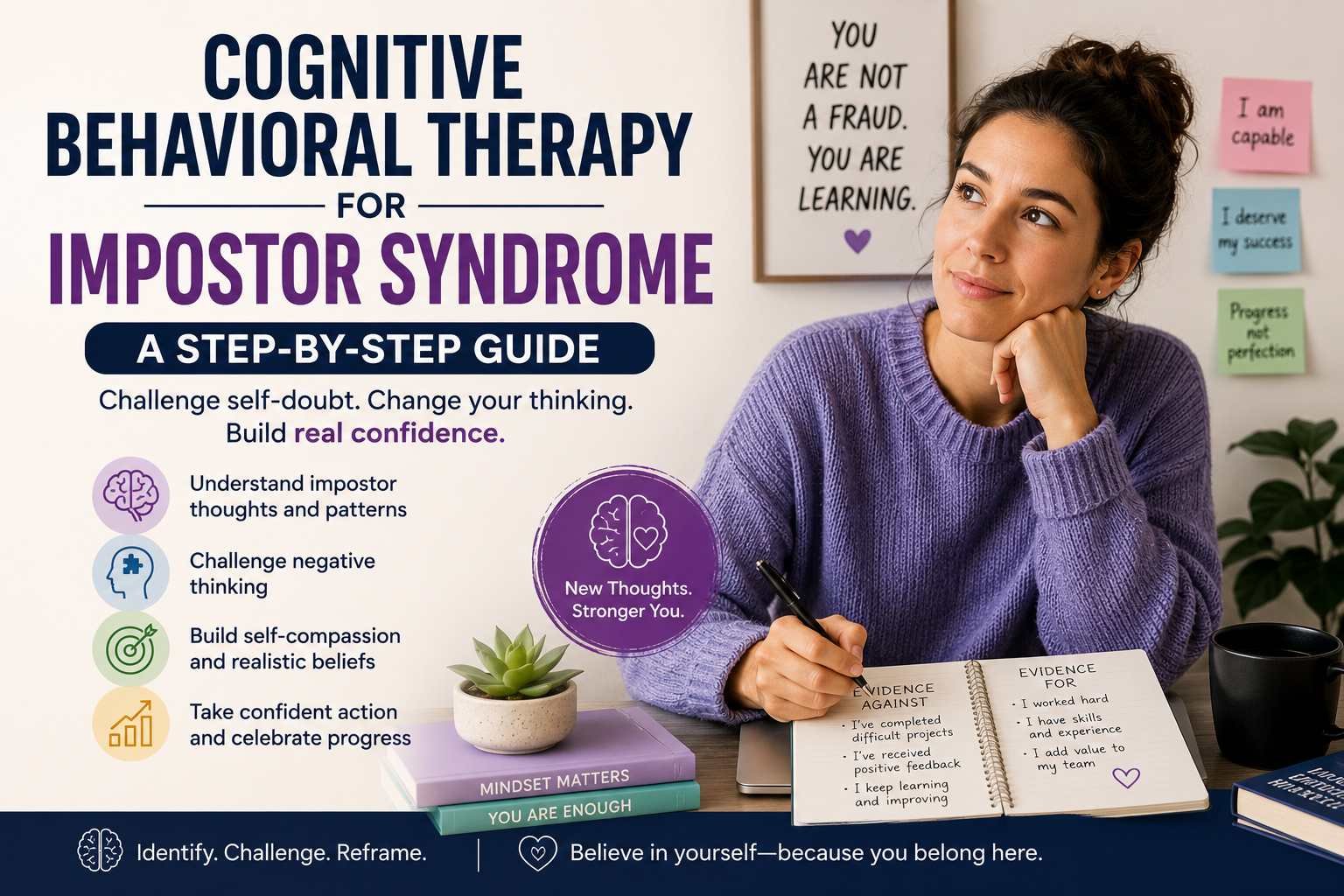
Impostor Syndrome refers to the condition in which a person believes he is a fraud. Also, he does not believe in his abilities and achievements. Today, in this article, we are going to share all the essential details about cognitive behavioral therapy for imposter syndrome.
In impostor syndrome, a person may see himself as a fraud, even when there is clear evidence of his success. As a result, imposter syndrome often lowers confidence and self-worth, leaving a person uncertain about their abilities.
Originally, many of us from various backgrounds can experience it, regardless of achievements or skills. In this blog, we explore the causes of Impostor Syndrome and show how Cognitive Behavioral Therapy (CBT) for imposter syndrome helps challenge negative feelings and build a more confident sense of self.
What is cognitive behavioral therapy for Impostor Syndrome? Signs & symptoms
Imposter syndrome, also called the imposter phenomenon, mostly affects people who doubt themselves. In this phenomenon, a person has negative doubts about themselves.
Moreover, it is a pattern of self-doubt and persistent belief that their achievements are due to luck, timing, or deception rather than ability.
Exclusive Signs and symptoms:
Some common signs and symptoms are as follows:
1: Some people have chronic self-doubt, and they neglect their objective success, such as promotions, degrees, and awards.
2: They think success is due to external factors as opposed to skill.
3: Some patients have a fear of being “found out” as a fraud.
4: We can overcome this syndrome with the help of Perfectionism and overpreparing to avoid exposure.
5: Some of us steer clear of new opportunities because of worry that we’ll fail in life.
Comprehension of cognitive behavioral therapy for impostor syndrome:

Impostor Syndrome is a type of disease in which a person develops negative thoughts and may start to doubt their abilities and believe that they do not deserve their success.
Indeed, this type of syndrome has many social implications, and people will realize how common it truly is.
Sometimes, anxiety and depression will fuel these negative thoughts and also create an inner voice that dismisses success and turns real achievements into “lucky breaks.”
Over time, this syndrome builds fear and causes many people to worry about being “found out.”
Moreover, various factors can trigger Impostor Syndrome. Early family experiences, social expectations, and pressure to achieve may all contribute to this syndrome.
Plus, these variables shape how you may view yourself and the world and can make real success feel unearned or undeserved.
How to identify cognitive behavioral therapy for impostor syndrome distortions?

Cognitive behavioral therapy begins by helping people identify and challenge some cognitive distortions and patterns of thinking that distort reality and affect emotions and behavior. Also, these cognitive distortions may play a significant role in maintaining imposter behavior and reinforcing self-doubt.
1: Black and white thinking:
Some people in this world face this syndrome and see situations only in extreme terms, such as total success or total defeat. Also, people with this mindset will leave less space for progress or learning.
2: Positive filtering:
People are ignoring or minimizing their achievements by blaming them on luck or outside factors. As a result, they can feel that genuine success is undeserved and temporary for themselves.
3: Telepathic assumptions:
Some people assume what others think without any real evidence. Also, they belief often heighten anxiety and self-depression in social or career settings.
4: Magnification:
Expecting the worst possible results in any situation. Moreover, these symptoms can easily create fear of failure and make achievement feel unsafe or short-lived.
Why Cognitive Behavioral Therapy for Impostor Syndrome Develops: Causes and Risk Factors:

You can easily understand that causes help guide treatment here:
Main factors include:
1: Early family problems:
Some people have mixed feelings. Also, some of us have sensitive feelings, but we face mixed reactions, including competition, conditional praise, and comparisons to siblings.
2: Uncompromising standards:
People have different cultural and community pressures, especially for first-generation students, immigrants, and some of the underrepresented groups.
3: Unforgiving standards:
People will face negative thoughts about their new job, a promotion, or returning to work after a breakup.
4: Take negative feedback to heart:
Some patients have developed negative thoughts, such as cognitive distortions like all-or-nothing thinking and discounting the positive.
What are the best strategies to overcome Impostor Syndrome with cognitive behavioral therapy?
1: Shifting your mindset:
Cognitive behavioral therapy for imposter syndrome helps people identify and reshape negative thoughts that maintain Impostor Syndrome. Moreover, you can easily replace self-critical beliefs with balanced, realistic statements.
However, you may start to see your abilities more accurately. Over time, this negative shift reduces some self-doubt and forms lasting, firm confidence.
2: Reality testing:
Cognitive behavioral therapy also includes some real-life experiments to test negative or false beliefs. For example, people may set achievable goals, accept praise without dismissal, and stay present in challenging situations. Moreover, these cognitive actions can create real evidence that remaining fears are frequently exaggerated and unfounded.
3: Mental resets:
Mental peace is essential for everyone, but no one can teach you how to live a balanced life with this syndrome. Moreover, CBT teaches you to stay present and manage depressive thoughts as they appear.
Plus, you can try grounding and breathing exercises to help you observe your inner dialogue without evaluation or avoidance. As a result, it becomes a protective measure against automatic false thinking.
4: Controlled progression:
Controlled progression of stressful scenarios helps you build confidence gradually. Moreover, a CBT-structured approach diminishes anxiety and depression, which weaken a person’s belief.
Also, you can try some new experiences to replace old patterns of avoidance and self-criticism.
How can we reduce Imposter Feelings?

Some proven clinician exercises are useful between multiple therapy sessions:
1: Tracking your wins:
You can easily record daily successes, positive feedback, and completed tasks regularly to build some objective evidence of competence.
2: Pause and verify:
It is the stage when a person pauses their self-reflection and asks themselves whether their thoughts exist.
3: Rewrite your inner thinking:
Replace these types of self-made thinking and prefer only real, evidence-based approaches.
4: Share feelings with trusted people:
You can easily talk with trusted colleagues or guides; often, this reveals that others have similar doubts and reduces isolation.
5: Setting focused goals:
People can easily focus on various actions such as submitting the proposal and applying for the same role rather than proof of worth.
When to seek Professional Help: Options for Cognitive Behavioral Therapy for Impostor Syndrome:
If impostor feelings cause some disturbance in a person’s life, they may lead to avoidance or impair daily functioning, and the person may consider seeking professional help.
Various therapy benefits include:
You may work with a trained professional to change these negative beliefs.
However, some customized interventions for career-related imposter feelings include tackling student anxiety and identity-based challenges.
Moreover, people may benefit from skill-building in self-compassion, assertive communication, and the achievement of realistic goals.
Different Therapies to Overcome Imposter Syndrome:

Different people may face various types of syndromes, and most of us can easily get it. Illustration of a group therapy session with multiple supportive interactions as well:
1: Therapeutic approaches:
Various therapies may provide useful tools to manage imposter syndrome. Also, techniques such as Cognitive Behavioral Therapy (CBT), Mindfulness-Based Stress Reduction (MBSR), and Group Therapy can greatly help in conquering these negative feelings.
All of the following therapies may equip various people with practical ways to manage their self-doubt and build self-confidence.
2: Cognitive Behavioral Therapy (CBT):
CBT is a highly effective therapy for addressing imposter syndrome. Also, this therapy may focus on identifying and replacing negative, self-critical thoughts with more constructive, more intelligent thinking.
One important restructuring technique in CBT involves challenging irrational beliefs and replacing them with balanced, realistic perspectives.
Moreover, it includes questioning negative beliefs and considering more realistic alternatives. Furthermore, it is a very helpful process that reframes negative self-beliefs and reduces self-doubt.
We can easily contact a mental health professional, such as a clinical psychologist or a counseling psychologist. Plus, they can improve the effectiveness of attempts to address imposter syndrome.
These psychologists can provide the necessary guidance to challenge irrational beliefs and support their clients’ continuous individual development.
3: Therapy of Mindfulness-Based Stress Reduction (MBSR):
(MBSR) is a powerful technique to address imposter syndrome. Also, these mindfulness practices, such as meditation, can help you become more aware of your negative thoughts and feelings without evaluation.
Additionally, this technique permits the recognition and compassionate dealing with feelings of inadequacy. Moreover, mindfulness therapy practices can nurture and support individuals at challenging times, considerably reducing anxiety and advancing overall mental health.
4: (GTS) Group Therapy Sessions:
GTS provides an encouraging setting where everyone can share their experiences and methods for overcoming negative thoughts. Moreover, GTS sharing develops a sense of fellowship and then reduces feelings of loneliness. Furthermore, Professionals have facilitated discussions to help individuals realize that imposter feelings are common and manageable.
There are some benefits of group therapy for imposter syndrome, including:
1: Validation and support from peers facing the same struggles.
2: We can gain empowerment through common experiences.
3: We will be able to learn coping strategies from others.
5: Developing self-kindness:
Developing self- kindness is fundamental to the journey to overcome imposter syndrome. Also, we can readily recognize and accept these accomplishments rather than dismiss them.
Moreover, self-kindness greatly enhances self-confidence. Furthermore, accepting compliments and praise without self-kindness is a powerful therapy toward nurturing self-worth.
Additionally, engaging in self-care routines such as eating well, resting, or taking a walk can improve self-care. These kind actions cause us to treat ourselves with the same kindness and understanding you would offer a good friend.
6: Establishing achievable targets:
To avoid negative feelings of inadequacy often associated with an individual’s cognitive behavior. Meanwhile, it’s important to set some future goals. Plus, you can create a manageable work plan with clear and attainable objectives. This therapy helps in avoiding unnecessary pressure and stress.
7: Consulting a specialist:
Consulting a health professional can be a breakthrough in resolving the impact of imposter syndrome and mental health issues. Moreover, therapists provide an encouraging setting for exploring and understanding the origins of negative feelings. Furthermore, professional help offers adapted strategies to combat persistent self-doubt.
8: Finding a good therapeutic fit:
For effective well-being, it’s important to find a therapist experienced in treating people with imposter syndrome. Therefore, recommendations from trusted sources, such as primary care physicians who can prescribe medication, along with support from friends and family, can help address the problem.
Additionally, online research and professional associations are valuable resources for finding qualified therapists.
Most Frequently Asked Questions
1: How to solve imposter syndrome in people?
Ans: To fix imposter syndrome, individuals must separate their anxious feelings from objective facts. Also, they keep a written record of their actual achievements, share all their self-doubt with trusted peers, and challenge negative self-talk.
2: How can an individual overcome imposter syndrome at his workstation?
Ans: Dealing with imposter syndrome at the office may require separating all self-doubt from objective reality. Also, actively collecting proof of matching competence.
3: What is the best therapy for curing imposter syndrome?
Ans: Cognitive behavioral therapy (CBT) is the strongest and best evidence-based therapy for imposter syndrome. Moreover, this practice is widely considered the best therapeutic approach for this syndrome.
4: What are the essential causes of imposter syndrome?
Ans: Impostor syndrome is caused by a combination of family upbringing, personality traits, and environmental or systemic pressures on people.
5: Is impostor syndrome considered a mental illness?
Ans: A big no, because impostor syndrome is not a mental illness. Also, they pretend to have self-doubt and negative thoughts.
The Final Words:
Cognitive behavioral therapy for impostor syndrome is not as complicated as most people think; it is self-doubt. Most people impose self-doubt on themselves due to family problems and social pressure. It is a curable syndrome, and people can overcome it easily with the help of a professional.
Moreover, individuals can get different therapies in various ways. Also, you can easily control all your thoughts.
1 thought on “Cognitive Behavioral Therapy for Impostor Syndrome: A Step-by-Step Guide”