
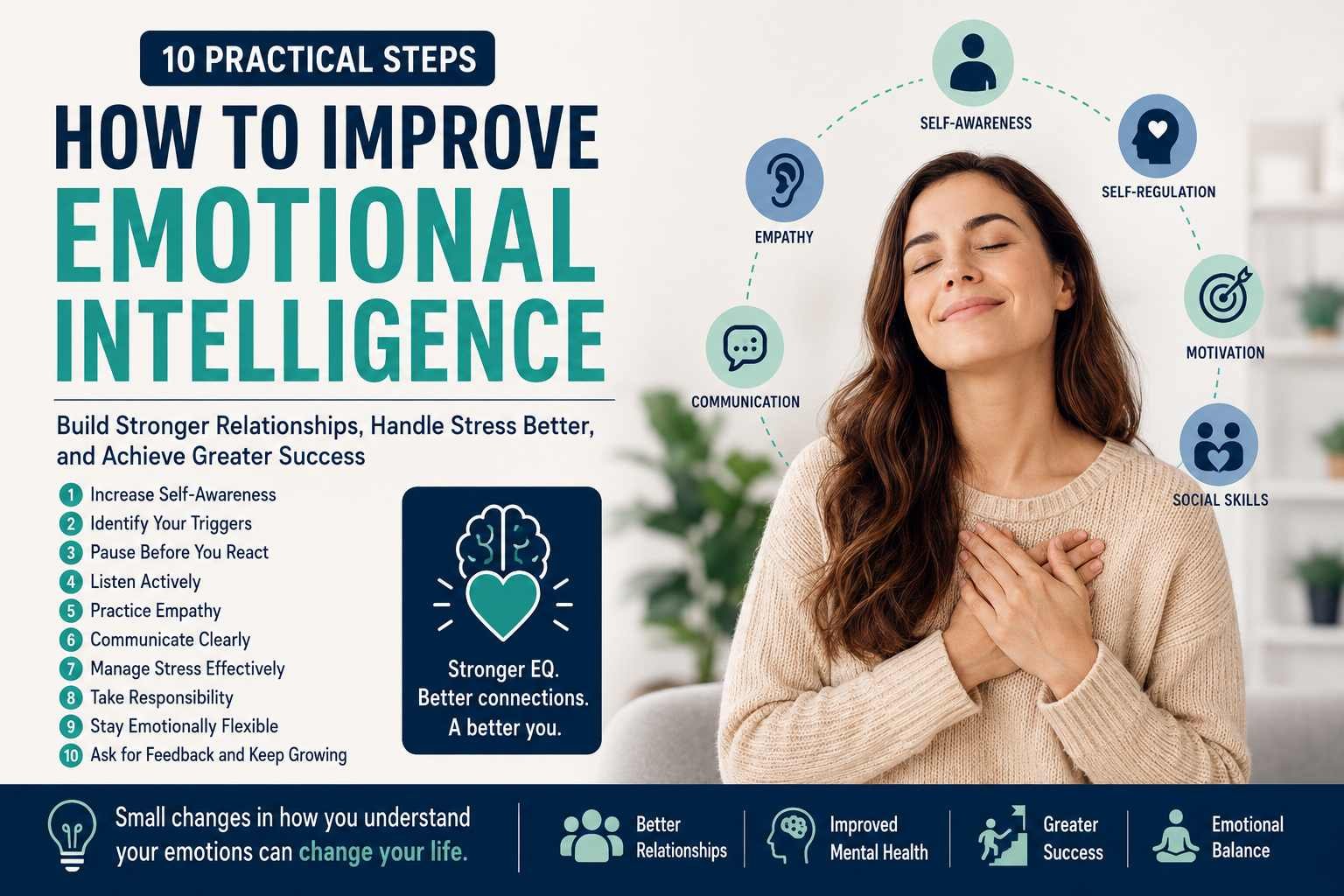
Learning how to improve intelligence—specifically emotional intelligence—can transform the way you communicate, handle stress, build relationships, and respond to difficult situations. Emotional intelligence, often called EQ, is the ability to recognize, understand, manage, and express emotions in productive ways. Unlike some personality traits, emotional intelligence can be developed through awareness, practice, patience, and intentional changes in behavior.
Whether you want to become a better partner, friend, parent, leader, coworker, or simply a more emotionally balanced person, strengthening your EQ can make a meaningful difference. The good news is that you do not need to overhaul who you are. Small improvements in how you understand yourself and respond to others can gradually build robust emotional skills.
What Is Emotional Intelligence?
Emotional intelligence is the ability to understand your own emotions while also recognizing and responding appropriately to the emotions of other people. It affects how you communicate, make decisions, resolve disagreements, manage pressure, and maintain relationships.
Emotional intelligence is generally associated with five core areas:
- Self-Awareness: Understanding your emotions, thoughts, strengths, weaknesses, and triggers.
- Self-Regulation: Managing reactions instead of allowing them to control your behavior.
- Motivation: Staying focused on goals even when circumstances become difficult.
- Empathy: Considering and understanding what other people may be feeling.
- Social Skills: Communicating effectively and building strong relationships.
A person with high emotional intelligence is not someone who never becomes angry, sad, anxious, or frustrated. Instead, they recognize those emotions as they occur and choose a thoughtful response rather than reacting automatically.
Why Emotional Intelligence Matters
Before exploring how to improve intelligence in emotional contexts, it is useful to understand why this skill matters in everyday life.
Your emotional responses influence every area of your life. A stressful conversation at work can affect your mood at home. A misunderstanding with your partner can change the way you communicate for the rest of the day. An unexpected criticism can cause immediate defensiveness or insecurity.
Emotional intelligence helps you create space between an emotional trigger and your ultimate response.
For example, imagine that someone criticizes your work:
- A low-EQ response might involve immediately becoming defensive, interrupting the person, or shifting blame.
- An emotionally intelligent response involves taking a moment, listening to the feedback, identifying what feels uncomfortable, and deciding whether the criticism contains something useful.
This does not mean accepting unfair treatment. Instead, it means responding intentionally rather than reacting impulsively.
10 Practical Steps to Improve Your Emotional Intelligence

1. Practice Self-Awareness
One of the most important parts of learning how to improve emotional intelligence is developing self-awareness. Self-awareness means recognizing what you are feeling and understanding why you feel that way. Many people experience strong emotions without stopping to identify them clearly.
Instead of simply saying, “I’m having a bad day,” try asking yourself specific questions:
- What exact emotion am I feeling right now?
- What happened immediately before I started feeling this way?
- What thoughts are connected to this emotion?
- Where do I feel this emotion physically in my body?
- What do I need at this moment?
Tip: Keeping an emotional journal can help. At the end of each day, write down one emotional experience, how you felt, how you responded, and what you might do differently next time. Over time, you will begin noticing clear patterns in your reactions.
2. Learn to Identify Your Emotional Triggers
Everyone has specific situations that create strong emotional reactions—such as criticism, rejection, feeling ignored, conflict, or perceived disrespect. Understanding your triggers is a vital step in how to improve intelligence because you cannot effectively manage a reaction you do not understand.
When you notice a strong reaction, try breaking down the pattern using this four-part exercise:
- Trigger: What happened?
- Emotion: What did I feel underneath the immediate reaction?
- Response: What did I actually do?
- Alternative: What could I do differently next time?
3. Pause Before You React

One of the most powerful techniques for improving intelligence when managing conflict is learning to pause. Strong emotions trigger an urge to act immediately, which can lead to sent texts, raised voices, or decisions you later regret. A simple pause gives your rational mind time to catch up with your emotional response.
When you feel overwhelmed, implement one of these quick reset habits:
- Take three slow, deep breaths.
- Count to ten before formulating your answer.
- Drink a glass of water.
- Use a clear phrase: “I want to respond thoughtfully, so I need a moment.”
4. Improve Your Listening Skills
Listening is an essential foundation when considering how to improve intelligence socially. Many people listen while preparing their rebuttal rather than listening to understand. They may interrupt, think ahead, or assume they already know what the other person means.
Active listening requires full presence. Focus on these core actions:
- Put away digital distractions.
- Listen for both the spoken words and the underlying emotions.
- Reflect back what you heard (e.g., “It sounds like you’ve been feeling overlooked lately”).
- Avoid judging, correcting, or offering unprompted advice immediately.
5. Develop Empathy
Empathy is the ability to understand another person’s feelings and perspective. It does not require you to agree with them; rather, it requires curiosity over immediate judgment.
Before judging someone’s behavior, ask yourself:
- What might this person be experiencing right now?
- What information or context might I be missing?
- How would I feel if I were in their position?
Developing empathy allows you to understand someone else’s feelings while still maintaining healthy personal boundaries.
6. Communicate Your Feelings Clearly

Another crucial strategy for how to improve intelligence in relationships is learning to express emotions without blaming others. Focus on using structured “I” statements that take ownership of your internal state.
Formula:
I feel [Emotion] + when [Situation] + because [Impact].
- Instead of:“You never listen to me.”
- Try:“I feel frustrated when I get interrupted, because it makes me feel like my thoughts aren’t valued.”
7. Manage Stress in Healthy Ways
Physical and mental stress deplete your capacity for self-regulation. When your nervous system is constantly overloaded, small problems feel overwhelming, making calm responses much harder to sustain.
To support your emotional intelligence, maintain key stress-management habits:
- Prioritize consistent, restful sleep.
- Incorporate regular physical movement.
- Take intentional breaks during demanding work sessions.
- Set clear boundaries to prevent daily burnout.
8. Take Responsibility for Your Behavior
Emotionally intelligent individuals recognize that while their feelings are valid, feelings do not justify harmful behavior. You can feel angry without being disrespectful, or feel hurt without trying to hurt someone in return.
Taking responsibility means acknowledging mistakes directly without shifting blame to circumstances or other people.
“I was wrong to raise my voice earlier. I felt frustrated, but that doesn’t excuse how I spoke to you. I’m sorry.”
9. Practice Emotional Flexibility
Life rarely goes strictly according to plan. Emotional flexibility means being able to experience disappointment or unexpected shifts without letting those events completely hijack your outlook.
Challenge rigid thinking patterns by shifting your internal monologue:
- Rigid Thought: “This always goes wrong and ruins everything.”
- Flexible Shift: “This didn’t go as expected, but I can adapt and find a way forward.”
10. Ask for Feedback and Keep Practicing
Understanding how to improve emotional intelligence requires recognizing that EQ growth is an ongoing practice. Seek constructive input from trusted friends, family members, or colleagues.
Consider asking:
- “Do I seem receptive when we have disagreements?”
- “Do I communicate my expectations clearly?”
- “How can I support you better when you are stressed?”
Applied EQ: Workplaces vs. Relationships

| Context | Core Application | High EQ Action |
| At Work | Professional collaboration & leadership | Accepting constructive feedback, staying calm during deadlines, and giving credit to colleagues. |
| In Relationships | Deepening emotional intimacy | Softening complaint start-ups, listening without immediate defense, and validating partner feelings. |
Common Habits That Reduce Emotional Intelligence
- Suppression: Forcing emotions down rather than processing them.
- Over-identification: Treating temporary feelings as permanent identities (“I am an angry person” vs. “I am feeling anger right now”).
- Assumptions: Expecting others to read your mind or assuming you know their hidden motives.
- Defensiveness: Refusing to acknowledge personal mistakes or shifting blame during conflict.
Daily Exercises to Build EQ
┌─────────────────────────────────────────────────────────┐
│                    DAILY EQ ROUTINE                     │
├─────────────────┬───────────────────────────────────────┤
│ Morning         │ Set an emotional intention for the    │
│ Check-In        │ day & identify current feelings.      │
├─────────────────┼───────────────────────────────────────┤
│ Midday Pause    │ Take 3 deep breaths before responding │
│                 │ to high-stress messages.              │
├─────────────────┼───────────────────────────────────────┤
│ Evening         │ Reflect on 1 interaction and how you  │
│ Reflection      │ managed your emotions.                │
└─────────────────┴───────────────────────────────────────┘
Frequently Asked Questions
What is the easiest way to start learning how to improve intelligence?
Start with basic self-awareness. Pause multiple times a day to identify exactly what you are feeling and notice physical signals like tension or a racing heartbeat.
Can emotional intelligence really be learned over time?
Yes. Unlike IQ, which remains relatively stable throughout adulthood, emotional intelligence can be continually strengthened through intentional practice, reflection, and behavioral changes.
Is being highly emotional the same as having high emotional intelligence?
No. Being deeply sensitive or experiencing intense feelings does not automatically equal high EQ. Emotional intelligence is about understanding, managing, and directing those feelings constructively.
How long does it take to see improvements in emotional intelligence?
Initial behavioral shifts—like pausing before reacting—can yield positive results within weeks. However, deeper emotional habits and automatic responses typically develop over months of consistent practice.
Can emotional intelligence help reduce workplace conflict?
Absolutely. High EQ improves active listening, reduces defensive reactions, fosters empathy for differing perspectives, and leads to clear, non-confrontational communication.
Conclusion
Understanding how to improve emotional intelligence is ultimately about becoming more intentional with your emotions and relationships. You do not need to eliminate anger, sadness, fear, frustration, or disappointment. Instead, you can learn to recognize these emotions, understand their causes, and choose responses that align with your values.
Start small. Practice identifying your feelings, pause before reacting, listen carefully, communicate clearly, develop empathy, manage stress, accept responsibility, and ask for constructive feedback.
The goal is not perfection. Emotional intelligence grows through everyday experiences. Every difficult conversation can become a chance to listen better. Every emotional reaction can become an opportunity for self-awareness. Every mistake can become a lesson.
With consistent practice, stronger emotional intelligence can help you build healthier relationships, communicate more effectively, handle challenges with greater resilience, and create a more balanced and fulfilling life.
2 thoughts on “How to Improve Emotional Intelligence: 10 Practical Steps for Better Relationships and Success”