
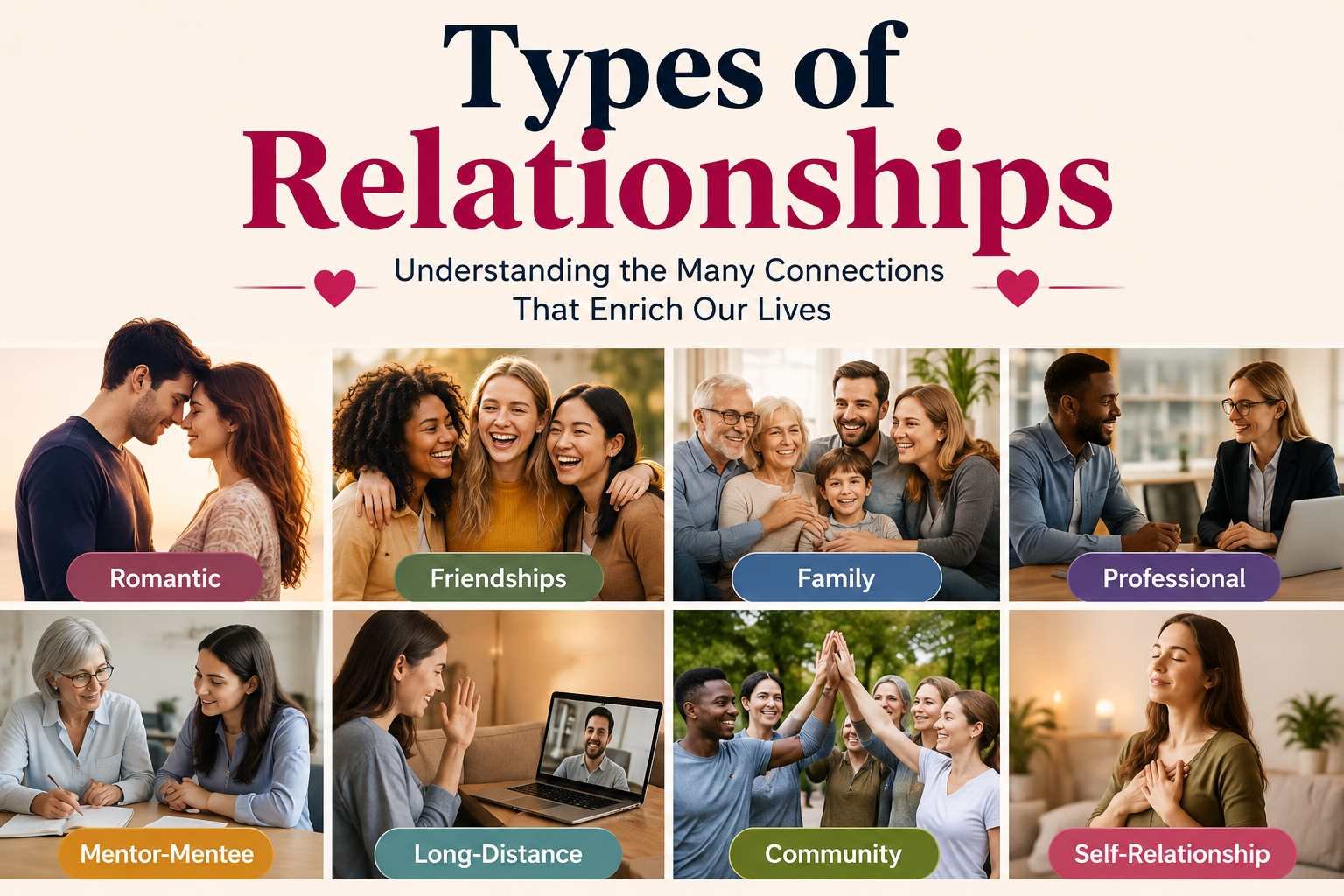
Understanding the types of relationships people experience can make it easier to recognize various forms of connection, affection, commitment, and companionship. Relationships are not limited to romantic partnerships. People build meaningful connections with family members, friends, coworkers, mentors, communities, and romantic partners. Each relationship carries its own expectations, boundaries, communication patterns, and level of emotional closeness.
Some relationships are built around friendship and shared interests, while others involve attraction, long-term commitment, or deep family bonds. Some connections last for decades, whereas others exist for a short period yet still leave a lasting impact. Learning about relationship dynamics can help you navigate your own connections and communicate your expectations more clearly.
What Are Relationships?
A relationship is a connection between two or more people based on a combination of communication, shared experiences, emotional attachment, responsibility, trust, or mutual interest.
Not every relationship shares the same level of intimacy. You might have a friend you talk to every day, a coworker you communicate with strictly professionally, and a family member you see only occasionally. All three are valid relationships.
The quality of a relationship depends less on how often people interact and more on foundational factors such as respect, trust, communication, reliability, and boundaries.
20 Common Types of Relationships
1. Romantic Relationships

Romantic relationships are among the most commonly discussed types of relationships. They generally involve attraction and may also include emotional intimacy, physical affection, companionship, and commitment. Romantic relationships can take many forms—some couples date casually, while others are committed to building a long-term future together.
A healthy romantic relationship typically involves:
- Mutual respect and open communication
- Emotional support and trust
- Shared responsibility and personal boundaries
- Affection and compatibility
- A willingness to resolve conflicts constructively
2. Friendships
Friendships are relationships built around mutual affection, trust, shared interests, emotional support, and companionship. A friend can be someone you have known since childhood or a recent acquaintance who quickly became an important part of your life.
Friendships vary significantly in closeness. Some friends may know your deepest concerns, while others serve primarily as activity partners or social companions.
What Makes a Strong Friendship?
- Mutual support and respect for boundaries
- Honest communication and shared enjoyment
- Reliability and acceptance of personal differences
- Celebrating each other’s successes
Good friendships do not necessarily require constant communication. Strong connections can remain meaningful even when life gets busy or distance intervenes.
3. Family Relationships

Family relationships include connections between parents, children, siblings, grandparents, cousins, and other relatives. These relationships can be deeply influential because family members often share history, traditions, experiences, and responsibilities.
However, being related does not automatically guarantee a close or healthy bond. Family relationships still require respect, communication, and appropriate boundaries.
Healthy Family Connections May Involve:
- Emotional support and respect for individuality
- Shared traditions and honest conversations
- Appropriate personal boundaries
- Support during difficult circumstances
- Acceptance of personal differences
4. Parent-Child Relationships
The relationship between parents and children is a foundational connection that changes dramatically throughout life. When children are young, parents hold primary responsibility for their safety, education, and everyday decisions.
As children grow into teenagers and adults, the relationship must evolve. A healthy adult parent-child relationship eventually becomes more balanced, with both people recognizing each other’s independence.
5. Sibling Relationships

Sibling relationships often feature a mixture of friendship, competition, affection, disagreement, and shared history. Siblings may argue frequently when young, but develop a deep connection later in life.
One defining feature of sibling relationships is their shared background. Siblings often recall family experiences and dynamics that no one else witnessed. Healthy adult sibling relationships benefit greatly from respecting each other’s distinct personalities, lifestyles, and boundaries.
6. Casual Dating Relationships
Casual dating is a form of romantic connection where people seek companionship, fun, and romantic experiences without immediately pursuing marriage or a long-term commitment.
The key to healthy casual dating is clarity. Both people should understand what the connection means and what each person expects. Problems occur when one person assumes the relationship is becoming serious while the other wishes to keep it light. Open communication reduces confusion and unnecessary heartache.
7. Long-Term Committed Relationships

Long-term committed relationships involve an ongoing decision to build a life together. Commitment may involve marriage, cohabitation, shared finances, raising children, or simply a mutual understanding that both partners are dedicated to a lasting partnership.
A committed relationship does not require partners to spend every moment together. Healthy long-term couples maintain individual interests while working toward shared goals.
Important Foundations:
- Deep trust and emotional intimacy
- Aligned long-term goals and financial communication
- Effective conflict resolution
- Mutual support alongside individual independence
8. Marriage Relationships

Marriage is a legally and often culturally recognized partnership between two people. It can encompass intimacy, companionship, financial cooperation, family responsibilities, shared property, and long-term planning.
However, the institution of marriage itself does not automatically guarantee a strong connection. A successful marriage requires ongoing effort, respect, flexibility, and communication regarding household duties, finances, career moves, and personal boundaries.
9. Long-Distance Relationships
Long-distance relationships occur when partners live far enough apart that regular in-person interaction is difficult. Distance brings unique challenges, including loneliness, scheduling conflicts, communication misunderstandings, and travel expenses.
However, technology allows couples to maintain daily contact through video chats, messaging, and shared online activities. Successful long-distance relationships require clear expectations about communication frequency and concrete plans for when they will see each other next.
10. Professional Relationships

Not all relationships are personal or romantic. Professional relationships exist within workplaces and business environments, encompassing interactions among coworkers, managers, clients, employees, business partners, and mentors.
Professional relationships function best when communication remains respectful, clear, and task-oriented. Trust and reliability are essential—colleagues must know that team members will fulfill their duties and uphold professional standards.
11. Mentor-Mentee Relationships
A mentor-mentee relationship connects an experienced individual with someone seeking guidance and professional or personal development. Mentors help mentees learn new skills, navigate complex environments, make career decisions, and avoid common pitfalls.
This relationship thrives on mutual respect. The mentor offers wisdom and constructive feedback, while the mentee takes initiative and applies that guidance.
12. Acquaintanceships
An acquaintance is someone you know casually but do not consider a close friend. You might know an acquaintance from work, school, your neighborhood, or a local social group.
Acquaintanceships are valuable because not every connection needs to be deeply personal. It is healthy to enjoy light conversation and casual interaction without sharing private details of your life.
13. Online Relationships

Digital platforms have made it easier than ever to form meaningful connections across the globe. Online friendships and romantic partnerships develop through social media, gaming communities, forums, and interest groups.
While online relationships can be deeply rewarding, they require clear boundaries. It is important to stay cautious about personal privacy and remember that an online profile may not capture a person’s entire real-life dynamic.
14. Platonic Relationships
Platonic relationships are close bonds between people that lack a romantic or sexual component. Two friends can share high levels of emotional intimacy, trust, affection, and companionship in a purely non-romantic way.
Platonic connections provide vital emotional support outside of romantic partnerships. Establishing clear boundaries helps prevent misunderstandings if one person begins to develop romantic feelings.
15. Work Friendships
Work friendships naturally develop between colleagues who interact regularly. These bonds make the workplace more enjoyable and provide social support during high-stress periods.
However, work friendships can become complicated if personal feelings clash with professional responsibilities. Maintaining professional boundaries is especially critical when one friend holds a managerial or supervisory role over the other.
16. Community Relationships
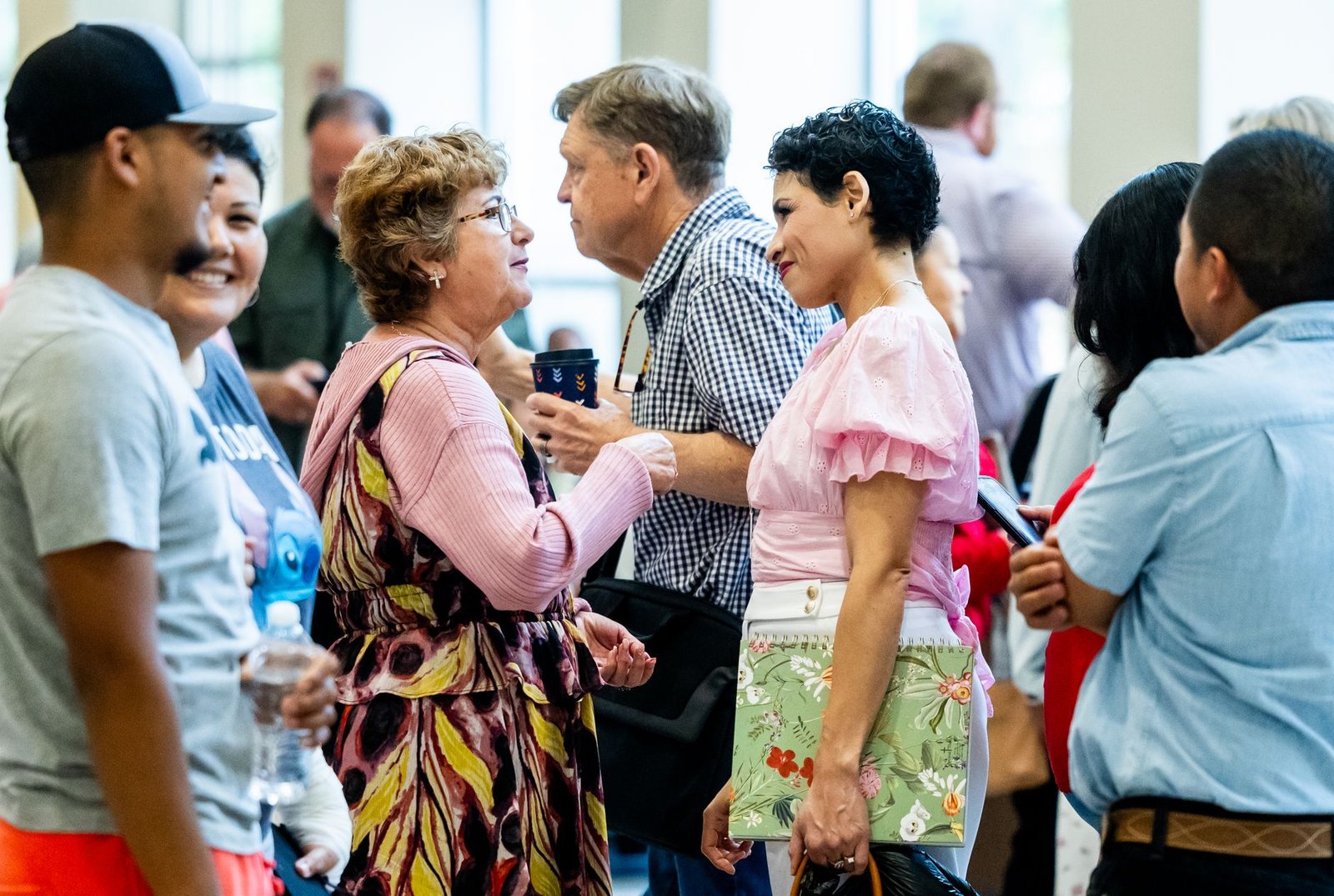
Community relationships connect individuals through shared physical spaces, interests, activities, or civic goals.
Common examples include connections formed through:
- Neighborhood associations and local events
- Sports teams, hobby clubs, and volunteer organizations
- Cultural, faith-based, or civic groups
These relationships foster a sense of belonging and help individuals feel connected to something larger than themselves.
17. Situationships
A situationship is an emotionally or physically intimate connection that lacks a clearly defined status or commitment. The people involved may spend significant time together and share intimacy without formally labeling themselves as a couple.
Situationships can suit individuals who prefer flexibility without long-term expectations. However, they often become emotionally difficult when one person develops deeper feelings or desires a commitment that the other cannot provide.
18. Open Relationships
An open relationship is a consensual non-monogamous dynamic where partners agree that they may pursue romantic or sexual interactions with other people outside their primary relationship.
To maintain a healthy open relationship, clear rules and ongoing communication are vital. Partners must discuss explicit boundaries, safety protocols, emotional expectations, and how to address jealousy if it arises.
19. Polyamorous Relationships

Polyamory is the practice of engaging in multiple romantic relationships simultaneously, with the full knowledge and consent of all partners involved.
Polyamory differs from cheating because it relies on complete transparency, honesty, and mutual consent. Because multiple partners are involved, open communication, emotional maturity, and scheduling coordination are essential.
20. Relationship With Yourself
The relationship you have with yourself is the foundation for all other connections in your life. It involves how you treat yourself, manage your emotions, honor your personal limits, and respond to your own mistakes.
A healthy self-relationship does not mean ignoring your flaws—it means practicing self-awareness, self-compassion, and personal respect.
How to Build a Better Relationship With Yourself:
- Identify your core personal needs and values
- Establish clear personal boundaries with others
- Practice self-compassion instead of harsh self-criticism
- Prioritize your mental, emotional, and physical health
- Take accountability for your actions and learn from mistakes
Key Elements of a Healthy Relationship
No matter what type of relationship you are navigating, healthy dynamics share consistent traits:
- Mutual Respect: Both individuals value each other’s opinions, personal boundaries, and individuality.
- Honest Communication: Issues can be discussed openly without fear of manipulation, passive-aggression, or judgment.
- Trust & Reliability: Trust is built consistently over time through kind, predictable, and dependable actions.
- Clear Boundaries: Both people understand and honor what is acceptable behavior and what is not.
- Emotional Safety: Individuals feel safe sharing their true thoughts and feelings without being mocked, dismissed, or punished.
- Balanced Effort: Healthy connections require participation from both sides. When one person consistently carries the emotional weight, the relationship becomes strained.
The Role of Boundaries
Boundaries define what you are comfortable with and how you expect to be treated. Far from being punitive, boundaries are essential tools that foster mutual respect in every type of relationship.
How Relationships Evolve Over Time
Relationships are dynamic rather than fixed. A casual acquaintance can become a lifelong best friend, a romantic partnership may transition into a platonic friendship, or a close connection might naturally drift apart as life priorities shift.
Major life transitions—such as moving to a new city, changing careers, entering parenthood, or experiencing health changes—frequently alter how people communicate and spend time together. Healthy relationships are flexible enough to adapt and grow through life’s changing seasons.
Frequently Asked Questions
What are the main types of relationships?
The primary types include romantic partnerships, family connections, friendships, professional relationships, casual dating dynamics, and the personal relationship you maintain with yourself.
What is the most important element of any relationship?
While no single factor guarantees success, mutual respect, open communication, trust, and clear boundaries form the foundation of every healthy connection.
What is a situationship?
A situationship is an informal connection that includes emotional or physical intimacy without an explicit agreement, label, or long-term commitment.
Can a relationship change from one type to another?
Yes. Connections evolve naturally. Coworkers can become close friends, friends may transition into romantic partners, and romantic partners might shift into platonic companions over time.
How do I know if a relationship is unhealthy?
A relationship is unhealthy if it is characterized by chronic disrespect, manipulation, dishonesty, physical or emotional harm, or a persistent disregard for your personal boundaries.
Conclusion
Understanding different types of relationships makes it easier to appreciate the diverse ways humans connect. Whether navigating romantic partnerships, family dynamics, workplace connections, or lifelong friendships, every relationship contributes to your personal growth and well-being.
No single dynamic suits everyone in every season of life. What matters most is that your relationships are built on a foundation of mutual respect, clear communication, trust, and shared effort. By honoring your personal boundaries and investing in healthy connections, you can build meaningful, lasting relationships across every area of your life.