
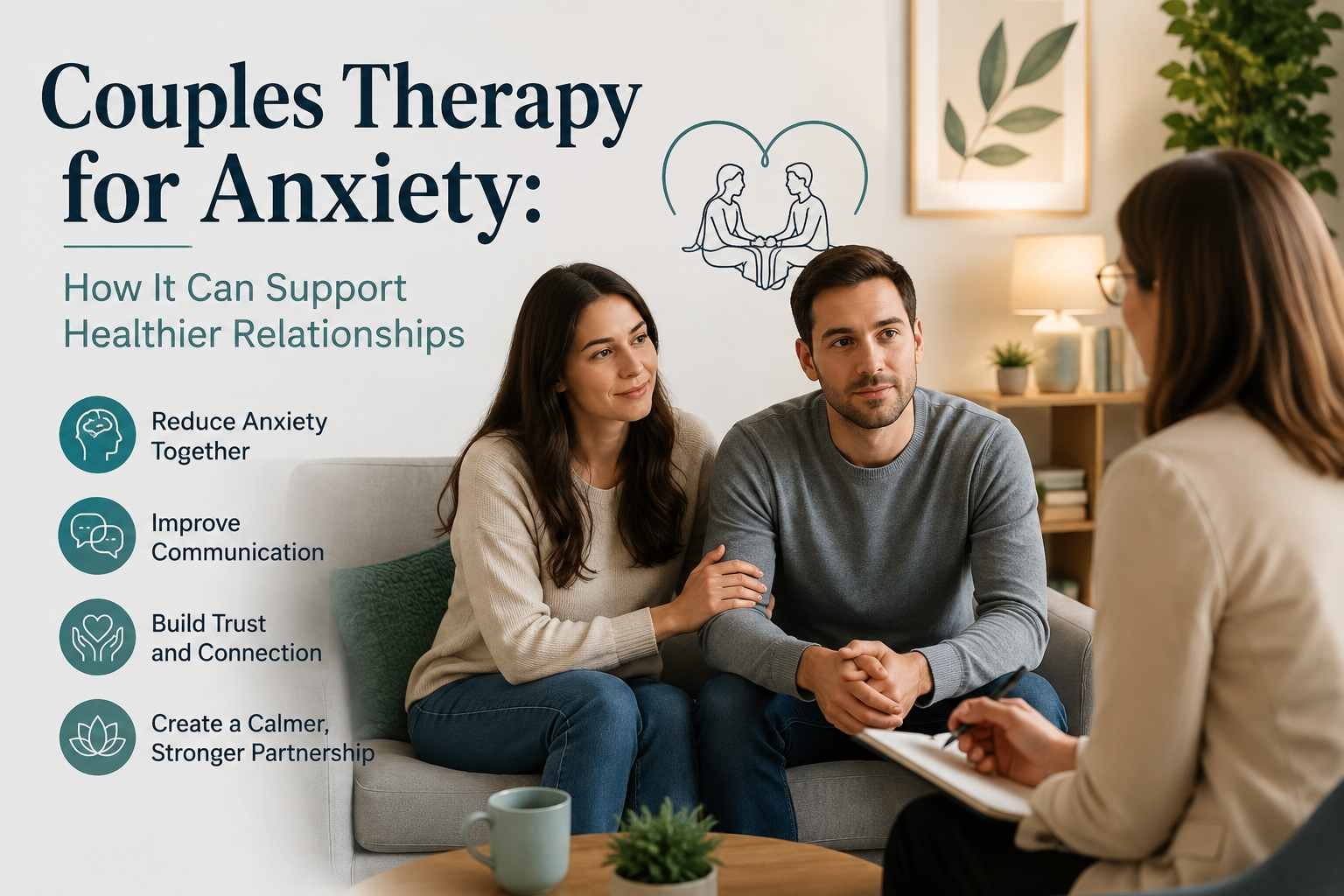
Couples therapy for anxiety can be really helpful when anxiety starts to affect how you communicate, trust each other, and feel close. Anxiety does not just affect the person who has it; it can also affect their partner. When you are anxious, you might worry, try to avoid things, or ask for reassurance a lot. Your partner might try to help, but this can create patterns that are hard to break.
Anxiety is a natural response to stress, but sometimes it becomes overwhelming. When anxiety becomes a central part of your daily life, working with a therapist can help you understand what is going on and find healthier ways to deal with it. Couples therapy for anxiety focuses on the relationship and how both partners interact with each other.
This guide explains how couples therapy for anxiety can help, what you can expect from therapy, and the benefits you might see. We will also talk about when individual treatment might be necessary.
What Is Anxiety in a Relationship?
Anxiety in a relationship can present in various ways. One partner might worry about being left, while the other might get anxious about fights, money, health, or social situations. Sometimes anxiety comes from within one person; other times, it stems from the relationship dynamics themselves.
For example, one partner might ask for reassurance frequently out of fear that something is wrong. The other partner might try to reassure them at first, but over time, they may become frustrated. The anxious partner might interpret that frustration as a sign that their partner does not care, which fuels further worry.
The Cycle of Relationship Anxiety
- Trigger: One partner gets anxious.
- Behavior: They ask for reassurance or try to avoid an uncomfortable situation.
- Response: The other partner reacts or accommodates.
- Temporary Relief: The response makes the anxious partner feel better for a short time.
- Re-emergence: The anxiety returns later.
- Escalation: Both partners grow increasingly frustrated.
It is essential to recognize this cycle because the goal is not to blame either partner. Instead, couples therapy for anxiety helps you identify the pattern and find constructive ways to respond.
How Couples Therapy for Anxiety Works
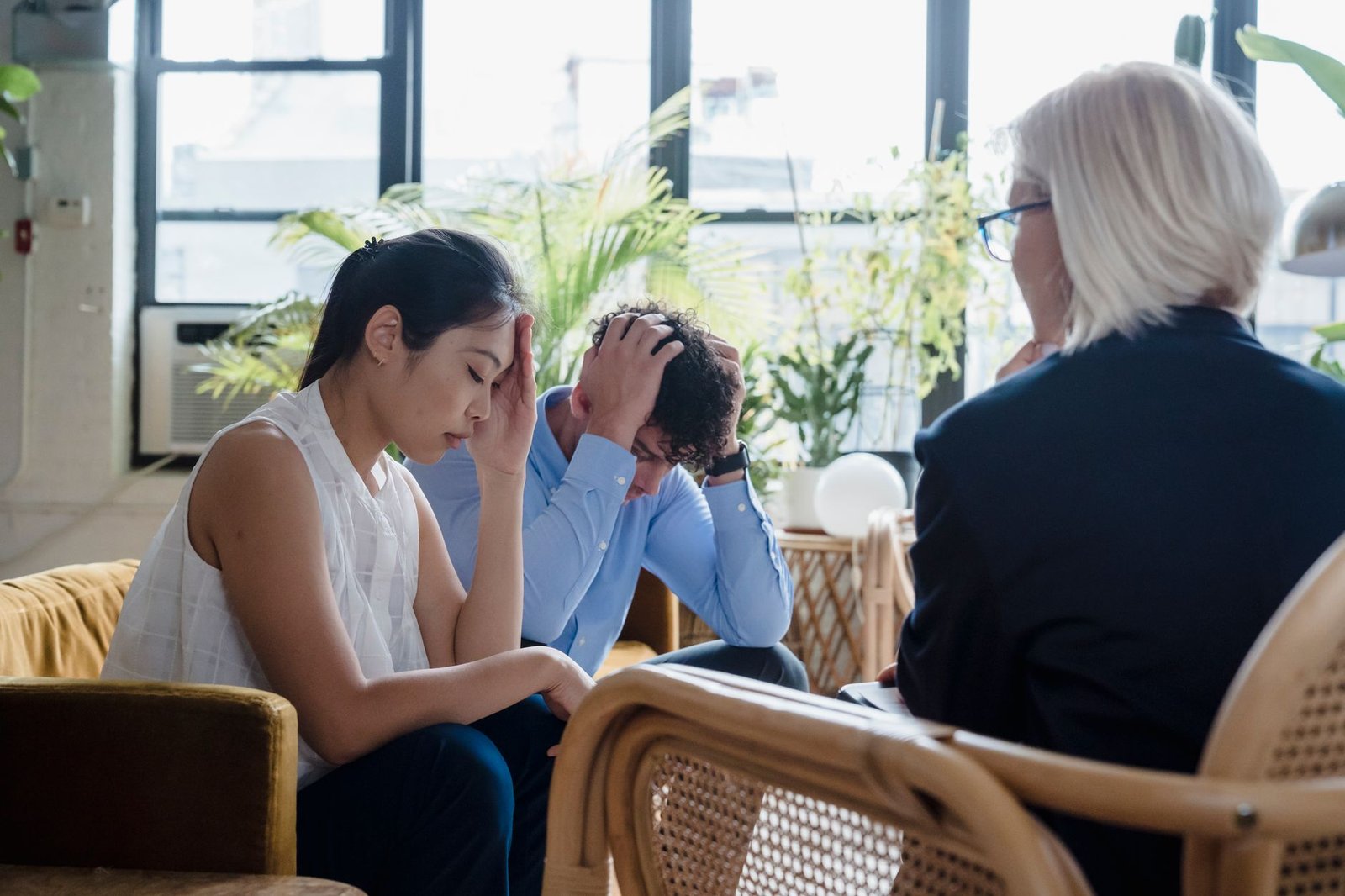
Couples therapy for anxiety looks at the relationship as a whole and considers how both partners feel. A therapist helps you identify how anxiety affects communication, decision-making, emotional closeness, and conflict resolution.
During sessions, a therapist might ask questions such as:
- When did anxiety start to affect your relationship?
- What situations make you worry the most?
- How do you respond when anxiety comes up?
- Does one partner always try to reassure the other?
- Does the other partner avoid talking about sensitive issues?
- Are your arguments escalating because of anxiety?
- What happens immediately before and after an anxious episode?
These questions help highlight behavioral patterns that you might not have noticed on your own.
Can Anxiety Affect Both Partners?
Yes, anxiety can affect both partners—even if only one person has a diagnosed anxiety disorder. The non-anxious partner might gradually alter their behavior to avoid making the anxious partner uncomfortable. They may cancel social events, answer repetitive questions, take on extra responsibilities, or alter plans to accommodate their partner’s fears.
While some accommodations are kind and helpful, over-accommodating can actually make anxiety worse over time. Furthermore, the partner experiencing anxiety may feel guilty for creating difficulties, leading to increased anxiety and emotional withdrawal.
Couples therapy for anxiety provides a structured space for both partners to discuss these dynamics constructively.
When Should Couples Consider Therapy?
There is no single “right time” for every couple to start therapy. However, if anxiety is consistently creating strain, seeking support can prevent further distress.
Signs You Might Benefit From Therapy:
- Frequent fights revolving around anxiety or fear
- One partner constantly seeking reassurance
- Avoiding social events or life goals due to anxiety
- Difficulty communicating about important decisions
- Emotional distance or loss of intimacy
- Routinely changing plans to accommodate fear
- Growing resentment or feeling disconnected
- Arguments about health, safety, or routines
- Feeling trapped in repetitive communication patterns
You do not have to wait until your relationship is in crisis to seek help. Addressing these patterns early helps build resilience before bigger issues develop.
Benefits of Couples Therapy for Anxiety
1. Better Communication
Anxiety can make conversations intense and urgent. An anxious partner might criticize, demand immediate responses, or withdraw, leading the other partner to act defensively. Therapy helps couples slow down these interactions so they can express underlying needs clearly (e.g., shifting from “You never understand me” to “I’m feeling overwhelmed and need support right now”).
2. Greater Understanding and Empathy
Partners often misunderstand anxiety-driven behaviors. Avoidance can be mistaken for laziness, while reassurance-seeking can feel controlling. Understanding the root cause fosters compassion over frustration.
3. Healthier Responses to Reassurance-Seeking
While repeated reassurance offers short-term relief, it solidifies anxiety over time. Therapy teaches partners how to offer genuine emotional support without enabling the anxiety loop.
4. Improved Emotional Connection
Anxiety can consume a couple’s time and mental energy. Therapy helps couples reconnect through intentional quality time, affection, and shared positive experiences.
5. Structured Problem-Solving
Anxiety often inflates problems, making them feel urgent and unmanageable. Therapy provides practical tools to separate emotional reactions from actionable decision-making.
What Happens During a Couples Therapy Session?
The structure of therapy depends on the therapist, the couple, and the specific concerns involved.
- Initial Assessment: The first session usually focuses on relationship history, primary concerns, anxiety triggers, communication styles, and treatment goals.
- Ongoing Sessions: Later appointments involve communication exercises, trigger mapping, learning coping strategies, and practicing new behaviors at home.
- Individual Check-ins: Some therapists may meet with each partner individually for part of the process to gather fuller context.
Establishing a strong working relationship with your therapist is crucial for achieving positive outcomes.
Types of Therapy That May Be Used

Cognitive Behavioral Couple Therapy (CBCT)
Cognitive behavioral approaches examine how thoughts, emotions, and behaviors interact within the relationship. Partners learn to recognize negative thought patterns and practice constructive responses.
Behavioral Couple Therapy (BCT)
Focuses on changing concrete interaction patterns, improving problem-solving, increasing positive shared experiences, and reducing behaviors that unintentionally reinforce anxiety.
Emotion-Focused Approaches
Explores core emotional needs, attachment styles, and recurring cycles of interaction. This is particularly beneficial for couples dealing with deep fears of abandonment or rejection.
Psychoeducation
Provides structured learning about how anxiety works biological and psychologically, helping both partners recognize accommodation cycles and healthier support methods.
Couples Therapy for Anxiety When One Partner Has a Disorder
When one partner has a formal anxiety diagnosis, couples therapy can act as a powerful complement to individual treatment. While one partner works on symptom management, joint sessions focus on communication, relationship dynamics, and building a supportive environment.
Couples Therapy for Relationship Anxiety
Relationship anxiety involves persistent worries specifically centered on the bond itself, such as:
- “Does my partner really love me?”
- “What if they leave me?”
- “Why haven’t they texted back yet?”
- “Are we actually compatible?”
While occasional insecurity is normal, constant fear can lead to excessive reassurance-seeking or emotional withdrawal. Therapy helps partners manage these fears and build grounded trust.
How Partners Can Support Someone With Anxiety
- Listen Without Trying to Fix Everything: Validate their feelings (e.g., “I can see how stressful this is for you”) rather than offering immediate solutions.
- Ask What Kind of Support Is Needed: Ask whether they need an open ear, practical help, reassurance, or quiet space.
- Encourage Professional Support: Gently suggest professional help if anxiety consistently impacts daily functioning.
- Maintain Healthy Boundaries: Balance support with personal boundaries to protect both partners from burnout.
- Engage in Shared Positive Activities: Continue doing enjoyable activities together to keep the relationship balanced.
What Couples Should Not Expect From Therapy

- Therapy is not a quick fix that guarantees anxiety will disappear completely.
- It is not a tool to “fix” or change one partner to suit the other.
- It requires active practice outside of sessions to see long-term improvement.
When Individual Therapy May Be Appropriate First
Couples therapy is not always the sole starting point. If an individual’s anxiety is severe, stems from unaddressed trauma, or involves panic disorder/OCD, dedicated individual therapy may be necessary prior to or alongside couples work. A mental health professional can help determine the ideal combination.
How to Choose the Right Couples Therapist
When looking for a provider, choose someone with explicit experience in both relationship dynamics and anxiety spectrum disorders.
Questions to Ask a Potential Therapist:
- What experience do you have with couples and anxiety?
- Which therapeutic modalities do you utilize?
- How do you balance the needs of both partners in sessions?
- How do you evaluate progress over time?
Online Couples Therapy for Anxiety
Virtual sessions offer a flexible alternative for couples with busy schedules, travel commitments, or limited local access to specialists. Ensure that any online practitioner is licensed to practice in your region and uses secure, HIPAA-compliant platforms.
When Couples Therapy May Not Be Appropriate
Couples therapy requires emotional safety and voluntary participation from both individuals. If a relationship involves domestic violence, coercive control, or severe safety concerns, standard couples therapy is not recommended. In these cases, individual support and safety planning take precedence.
Practical Daily Habits Couples Can Practice
- Set Dedicated Discussion Times: Talk through heavy topics during calm moments rather than in the heat of an emotional reaction.
- Map Common Triggers: Keep track of situations that routinely escalate anxiety so you can navigate them as a team.
- Set Boundaries on Reassurance: Shift from endless reassurance loops to supportive, grounding statements.
- Practice Shared Relaxation: Engage in low-stress activities together like walking, breathing exercises, or quiet hobbies.
- Celebrate Small Wins: Recognize incremental progress and effort when navigating difficult situations differently.
Frequently Asked Questions
Can couples therapy help with anxiety?
Yes. It is effective when anxiety impacts relationship communication, routines, or emotional intimacy. It works best alongside individual care when necessary.
Is couples therapy only for relationships in crisis?
No. Many couples utilize therapy proactively to strengthen communication and address emerging patterns before severe distress occurs.
Can couples therapy make anxiety worse?
Navigating difficult topics can temporarily feel uncomfortable. However, a skilled therapist ensures pacing and boundaries keep the environment safe and constructive.
How long does couples therapy typically take?
Duration varies based on goals, severity of anxiety, and progress. It can range from short-term, solution-focused work (8–12 sessions) to longer-term care.
Final Thoughts
Couples therapy for anxiety offers a clear pathway to break negative communication loops, establish healthy boundaries, and rebuild emotional closeness. By working together, couples can transform anxiety from a source of conflict into an opportunity for deeper mutual understanding and support.